As a newly appointed government veterinarian in Medawachchiya, Sri Lanka, I stayed late one evening after the rest of the staff left. I browsed through personnel files to familiarise myself with my colleagues’ work histories, though it felt unfair to read their private records in an empty office. By the time I locked the files back in the cupboard and signed the attendance register, it was past 5:00 p.m. I felt a quiet sense of satisfaction at having successfully completed my second day on the job.
Suddenly, a jeep rumbled onto the office premises. Four police officers jumped out and strode toward me.
“I am the Inspector of Police, Padaviya,” one of them announced.
I looked up at him expectantly.
“A post-mortem needs to be done on an elephant in Padaviya,” he explained.
I was thunderstruck; my mouth went completely dry. Aside from seeing elephants at the Kandy Esala Perahera and the Dehiwala Zoo, I had never interacted with one. Given the tense political climate in Sri Lanka at the time, I also made it a habit to avoid the police. Unsettled by the sudden confrontation, I stood frozen, unable to reply.
Noticing my hesitation, the Inspector’s tone turned authoritarian. “You have to come and perform the post-mortem. We have arrested two suspects who shot the elephant,” he said in a stern voice that brooked no argument.
“And we have recovered both tusks,” another officer added.
I had no choice. “All right. How do we get there?”
“Get into the jeep.”
Wedged in the front seat between the driver and the Inspector, I braced myself as the vehicle sped off. Before long, the Inspector struck up a conversation.
“Doctor, are you from Jaffna?” he asked.
“Yes.”
“When did you arrive in Medawachchiya?”
“Yesterday.” Hoping to steer the conversation away from my background, I quickly added, “When was the elephant shot?”
“Exactly one month ago.”
My mind raced in confusion. How was I supposed to perform a post-mortem on an animal that had been dead for a month? Still, seeing how determined the Inspector was to secure a medical report, I kept my doubts to myself.
“Doctor, how is the conflict situation in Jaffna?” he asked, circling back to his original line of questioning. I knew he was trying to size me up.
“I was only in Jaffna for two days,” I answered carefully. “I spent the rest of my time in Kandy.”
Disappointment flickered across the Inspector’s face; clearly, he had hoped for a more forthcoming answer.
We were driving through an agricultural stretch between Medawachchiya and Padaviya, flanked by large trees. Beyond the road lay open green fields dotted with straw-thatched cottages. Unlike the tiled roofs and woven coconut-frond fences I was accustomed to, no fences separated these homes.
Eventually, the jeep pulled up beside a cluster of small roadside shops.
“Let’s have some tea,” the Inspector said, stepping out.
The boutique owner served us with exaggerated deference. When he extended that same courtesy to me, a shiver ran down my spine, like a centipede creeping up my neck. The shopkeeper then took two packets of Bristol cigarettes, handing one to the Inspector and the other to the remaining officers.
“Sir, do you smoke?” he asked me.
I declined and offered him a ten-rupee note for the tea, which he flatly refused. I glanced at the Inspector.
“We know the owner well,” the Inspector explained smoothly. (In Sri Lanka, police officers rarely pay for such small services.)
People well-known to the police are the ones to pity, I thought to myself.
We climbed back into the jeep and drove for another half hour along a road hemmed in by thick scrub. Finally, the Inspector ordered the driver to stop.
“We have to walk the rest of the way,” he said.
It was past 6:00 p.m., though the sun was still bright. Joined by two local villagers, we hiked for about fifteen minutes until we reached a large reservoir—a tank. Pointing toward the right bank, the Inspector said, “The elephant is right there.”
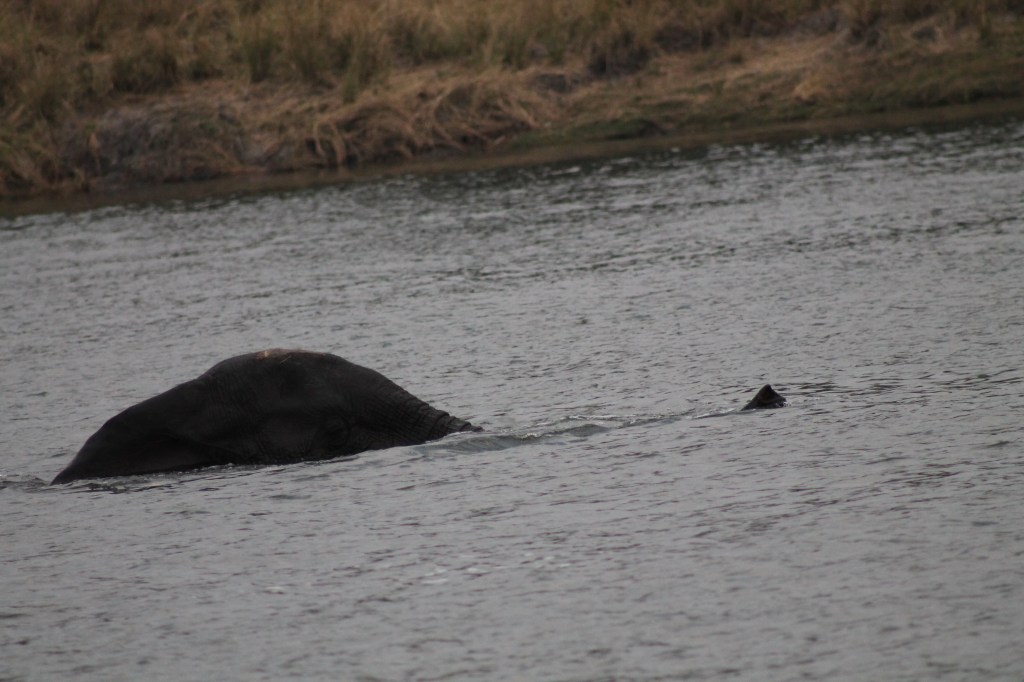
I stared in bewilderment at a mound of bones nearly six feet high. Rendered fat had melted and spread across the skeleton like moss. Surprisingly, there was no stench—only scraps of dried hide clinging to bare bone.
“Inspector, how can I possibly perform a post-mortem on this?” I protested.
“We cannot file a case without your report,” he replied flatly.
Realising he wouldn’t leave without one, I stepped closer to examine the remains. Every bone was accounted for—except the skull.
“The elephant’s head is missing,” I announced.
The Inspector looked thoroughly rattled. I felt a quiet surge of relief at having shifted the problem back onto his shoulders.
At once, the Inspector ordered his three constables to search the surrounding jungle while instructing the two villagers, Silva and Appuhamy, to wade into the tank. Ten minutes later, they hauled the skull up from the tank bed.
Examining the cranium closely, I spotted a small puncture near the ear canal. When Silva split the bone with an axe, a lead bullet dropped out from inside.
Both the Inspector and I were overjoyed. With concrete proof that the elephant had been shot, I could write my post-mortem report, and he could finally file his case. By the time they dropped me back at my quarters, it was 8:00 p.m.
(Extracted from my novel, Butterfly Lake)


மறுமொழியொன்றை இடுங்கள்