Good afternoon, everyone
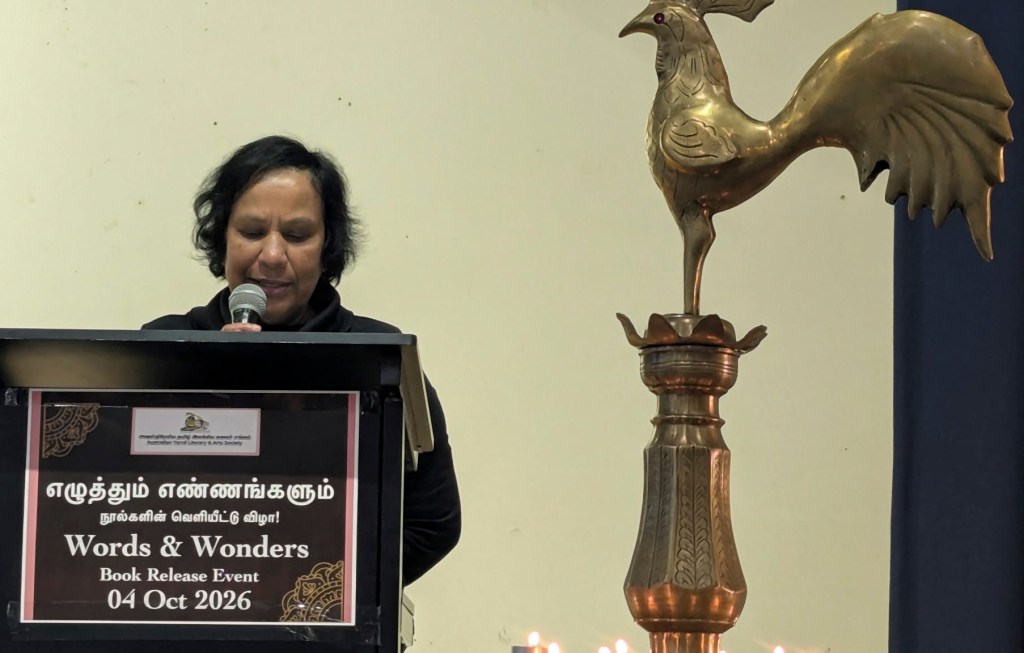
I am Preethi Karunaratne
Dr Noel Nadesan and I both studied Veterinary Science and Surgery at Peradeniya University in Sri Lanka, and we have been good friends ever since.
During that time, we worked as Government vets and mainly looked after cattle, goats, pigs, and poultry. Small animal practice, which includes cats and dogs, was minimal unless it was a practice in a city.
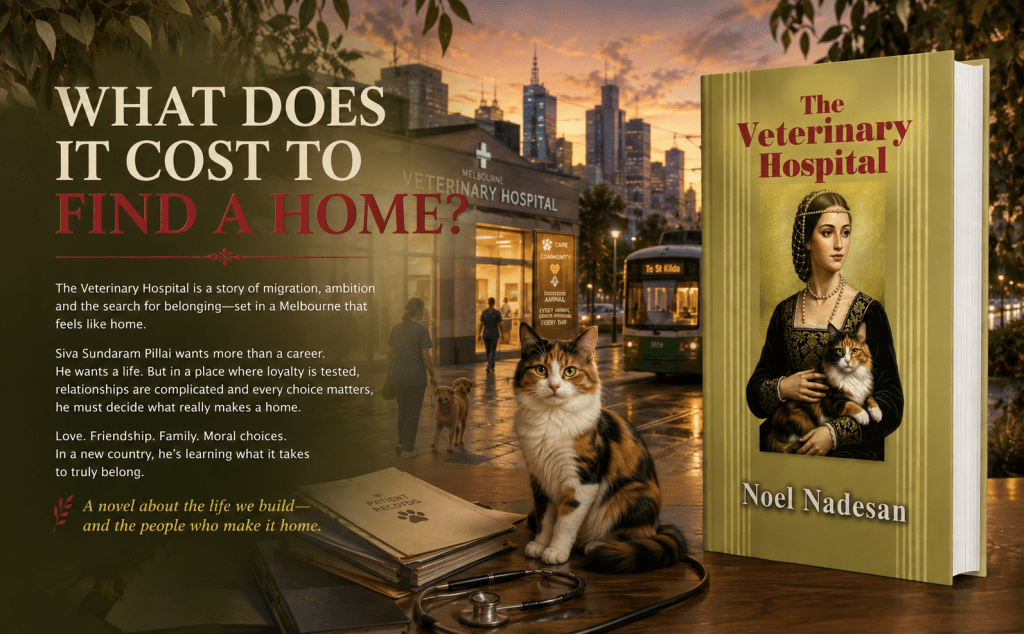
Dr Noel Nadesan has written many books on social, political, medical and arts topics in general, but on this occasion, he has selected a subject very close to his life experience, a novel about a veterinary hospital, which he wanted me to review. Thank you for the opportunity, Nadesan.
Ladies and Gentlemen
This is a very interesting, well-written book that highlights the day-to-day activities and characters expected in a busy veterinary hospital.
The book draws heavily on the main character, a migrant Sri Lankan Tamil vet, Sundaram Pillai, who came to Australia with his family. He passed his registration exams and found work in a busy hospital, aiming to settle in Melbourne and give his children the best education possible. Of course, this is a lofty ambition for most of us.
In this book, Collingwood, the hospital resident cat, is an interesting character who is allowed to roam everywhere in the hospital, being able to sense what’s happening in the surroundings.
Rather than a clinical manual, the story unfolds as a narrative about the relationship between humans and animals, ethics, racism, politics, and social impact. As you read through the book, you will realise how Sundaram Pillai got fascinated and captivated by Western culture, like going to pubs, drinking, socialising, partying, etc.
I reckon he realised he had to change his way of life to survive in his workplace.
He is a smart vet who did not refuse any kind of surgery, big or small, even after an orthopaedic surgery mishap.
His personality change has sometimes led him to lie to his loving wife. (Not in real life or a dream)
The book centres on empathy, bonds, and shared suffering between animals and humans.
Though based on clinical experiences, it highlights how animals display loyalty, pain, and emotion, often contrasting this with human cruelty.
It challenges the reader to reflect on animal welfare, how society treats stray and owned animals, and the moral duty of care, ethical norms and standards required from vets, professionals, and pet owners alike. The narrative includes personal reflections on migrations, professional challenges, and cultural attitudes toward animals in Southeast Asia, as well as the gap in the Western world’s outlook. The narrative uses real-life case studies and hospital anecdotes; however, the story is so powerful that it delivers broader philosophical and social insights beyond the walls of the Veterinary Hospital.
Thank you, Nadesan, for sharing some wonderful experiences of a vet. Hope your pioneering work will lead other veterinarians to drop the scalpel and take up the pen to share.
Thank you all. Enjoy reading.
This book is available to the public on Amazon.


மறுமொழியொன்றை இடுங்கள்