Like any veterinary professional, I have always tried to perform my duties without mistakes. But mistakes do happen, sometimes for reasons beyond our control and sometimes because of our own errors.
A few years ago, I operated on a female cat belonging to a nurse at my clinic. It was a routine sterilisation procedure, and the surgery was straightforward and uneventful. Two weeks later, when the wound had healed, I removed the sutures.
About six months later, the nurse noticed a small lump at the surgical site. The cat seemed uncomfortable when I pressed the area.
“Don’t worry. It will settle down with time,” I reassured her.
Perhaps I was overconfident after performing thousands of such operations. From time to time, she mentioned the lump again, but I confess that I did not give it much thought.
One day, I finally asked her, “Has the lump become any bigger?”
“No,” she replied. “But it hasn’t become any smaller either.”
“All right. Bring her in tomorrow. I’ll operate and find out what it is.”
The next day, when I explored the swelling, I discovered that abdominal fat had protruded through the surgical site, forming a small hernia. I was surprised. Several factors could have contributed. The cat might have jumped soon after surgery, or the suture material might have been faulty.
Whatever the explanation, the responsibility was mine.
After the second operation, the swelling disappeared.
In Australia, several avenues exist for reviewing mistakes made by doctors and veterinarians. Patients—or, in veterinary medicine, animal owners—can raise concerns with professional boards, insurers or, in serious cases, the courts. But another court from which a conscientious doctor or veterinarian cannot easily escape is one’s own conscience.
A genuine mistake can remain in the mind for years. I still remember an incident from nearly a quarter of a century ago as vividly as if it happened yesterday.
Shortly after graduating as a veterinarian from the University of Peradeniya in Sri Lanka, I was appointed as a government veterinarian in Medawachchiya, in the North Central Province.
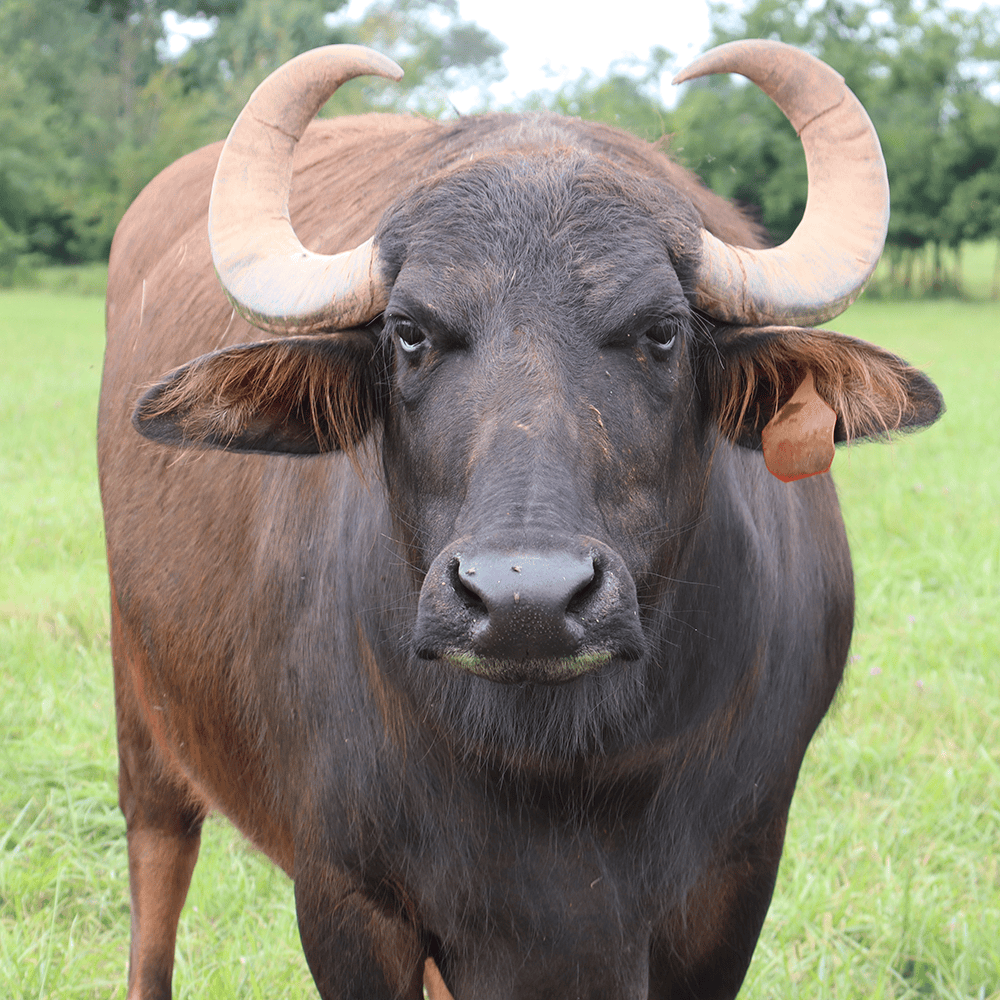
One day, I received an urgent call from a village near Kebithigollewa. A buffalo was having great difficulty calving and was lying on the ground in distress. As this was to be my first major field operation, I travelled there on a motorcycle with my assistant, Amarasinghe.
It was the monsoon season. The village roads were flooded, and by the time we arrived, our clothes were splattered with mud.
A farmer came forward to welcome us.
“You have come like angels to end her suffering,” he said.
He led us into a field.
Even for a veterinarian, it was a distressing sight.
A large black buffalo lay on her side in a muddy puddle, writhing in pain from obstructed labour. Her head lay partly in the water while the rest of her body rested on slightly higher ground. She may have fallen while trying to drink. Her swollen vulva was covered with discharge and flies.
Her uterus contracted rhythmically in powerful waves, shaking her entire body. With every contraction, her head and shoulders lifted from the ground before collapsing again.
It was the first time I had seen an animal suffering so intensely. I wanted desperately to relieve her pain.
“Amarasinghe, we’ll have to operate. Ask them to bring plenty of water.”
I laid out my surgical instruments on two green coconut leaves.
After cleaning the buffalo as well as conditions allowed and administering local anaesthesia, I began the operation. I made an incision through the abdominal wall and entered the abdominal cavity.
Immediately, loops of intestine spilled through the incision like schoolboys rushing through the gates when the final bell rings.
I began searching for the uterus among the mass of abdominal organs.
I searched and searched.
I pushed my arm deep inside the buffalo, but I could not find it.
Eventually, exhausted and bewildered, I stopped for a moment.
Then the awful truth struck me.
I had opened the wrong side of the buffalo.
For this procedure, I should have approached from the left.
How could I have forgotten something so basic?
Had my anxiety and eagerness to relieve the animal’s suffering overwhelmed my training?
My stomach filled with acid. Sweat poured from my body.
Then came the guilt.
The whole village was watching us. Only a short while earlier, the farmer had described us as angels who had arrived to save his buffalo.
How could this angel now announce that he had cut open the wrong side?
I decided that truth, however painful, was the only medicine I had.
In my broken Sinhala—the only language the villagers understood—I began:
“The incision on this side was a mistake. We have to close it and operate from the other side.”
Before I could finish, Amarasinghe stopped me.
“Leave it to me,” he whispered.
Then, turning confidently to the farmer, he announced:
“The buffalo is having difficulty calving because the uterus has moved to the other side. We have to stitch this side and make another incision on the left.”
I stared at him in disbelief.
The lie had already escaped. There was no way to catch it and put it back in his mouth.
Was lying really the best solution?
The farmer seemed completely unconcerned.
“If the buffalo survives, that is enough for us,” he said. “She gives us thick curd.”
He smiled broadly, revealing teeth stained red with betel.
With the help of several villagers, we continued the operation. Eventually, we successfully delivered a male calf.
As they say after a difficult Caesarean section in human medicine, both mother and baby were safe.
The entire ordeal took nearly six hours.
Having watched us struggle for so long, the villagers praised our achievement. That evening, they invited us to dinner at the farmer’s house.
Along with the meal came *kasippu*—the locally distilled illicit moonshine.
Later, I turned to Amarasinghe, who was happily drinking his *kasippu*.
“Why did you tell them that lie?” I asked.
He looked at me as though the answer were obvious.
“If I hadn’t told that lie, would I have got the *kasippu*?”
I took another sip.
“I’m getting a burning sensation,” I said.
Amarasinghe smiled.
“Which is causing it—the lie or the *kasippu*?”
“Both,” I said.


பின்னூட்டமொன்றை இடுக