Tamil Article translated by ChatGPT and again edited by Noel Nadesan
The overland trade routes connecting China with Europe, Egypt, and other Western regions expanded during China’s Han Dynasty in the second century BCE. This vast commercial network, later known as the “Silk Road”, connected East and West for many centuries.
The Silk Road was not a single, straight route. It was a network of trade routes that began in different places, joined one another at various points, and then branched out again. The Chinese were not the only people who traded along these routes. Indian merchants also participated actively. In particular, routes from India through Kashmir connected with the great trading networks of Central Asia.
Travelling along the Silk Road was no ordinary journey. Merchants sometimes took months, or even years, to complete their travels. They moved in caravans with camels, horses, and carts carrying their merchandise. Armed guards accompanied them to protect their valuable goods from bandits.
Trade was not the only thing that travelled along the Silk Road. Languages, cultures, knowledge, technology, art, and religions also moved from one country to another. The Silk Road played an especially important role in spreading Buddhism from India into Central Asia and eventually to China. Diseases also travelled along these routes. Historical evidence suggests that Central Asia’s commercial connections were among the key routes through which the plague that devastated Europe spread westward.
Overland trade between the East and Europe continued for centuries. In 1453, the Ottoman Empire captured ‘’Constantinople’’, the capital of the Byzantine Empire. This became a major turning point in European history. Afterwards, European attempts to find new sea routes that would provide more direct access to Eastern goods intensified.
Portugal and Spain became increasingly involved in maritime exploration and trade. Vasco da Gama’s voyage to India and Columbus’s westward journey were part of this great search for new sea routes. What began primarily as a search for trade later developed into political and military domination. Trading posts were established in India, Sri Lanka, Indonesia, and elsewhere, and many eventually became colonies. This transformation profoundly shaped the next five centuries of world history.
Along one branch of this ancient Silk Road, we found ourselves in ‘’ Baku’’, the capital of Azerbaijan.
Baku can be seen as a city with two faces. One is modern Baku, which has risen on the wealth generated by oil and natural gas. The other is the ancient city enclosed within fortress walls. It is here that the famous ‘’ Palace of the Shirvanshahs’’ stands.
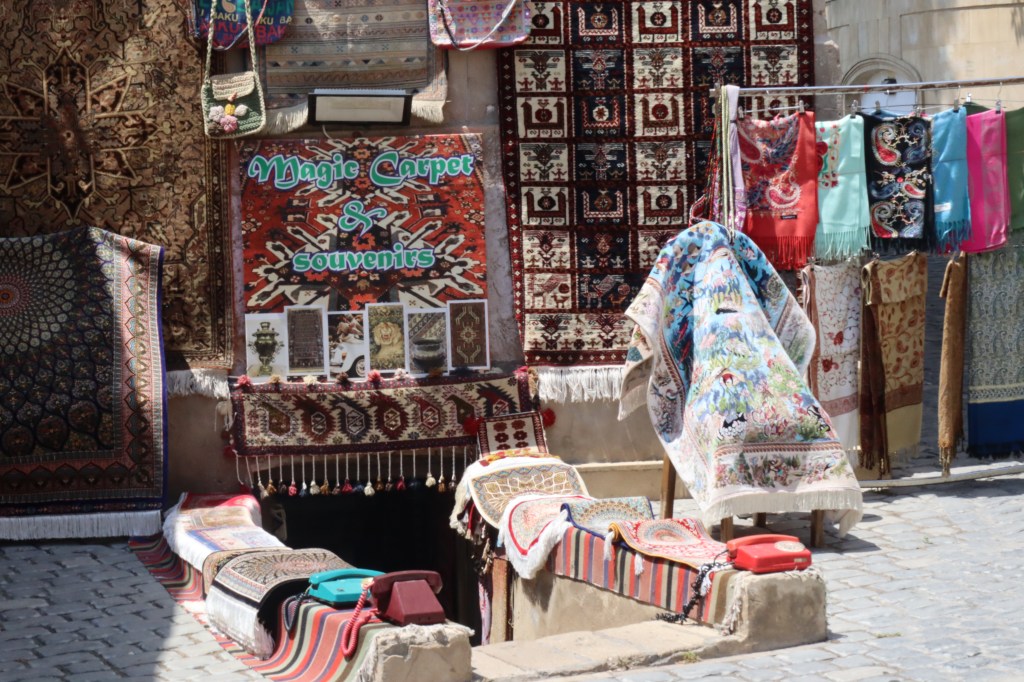
As we walked through the old city, I felt that we were standing at an important crossroads of the ancient Silk Road. Looking around, it seemed as though evidence of that distant era was still watching us. Ancient buildings, narrow stone-paved streets, and the old inns where merchants once stayed remain as silent witnesses to that period.
One of the major Silk Road routes passed through ‘’Tabriz’’ in present-day Iran. Another branch touched Baku on the shores of the Caspian Sea. At different periods, this region came under the influence of various empires. The existence of secure accommodation for travelling merchants suggests that rulers understood the importance of trade and provided protection and support for it.
As we walked slowly through the old quarter, our guide pointed towards a large ancient building.
“This was a place used by Indian merchants,” he told us.
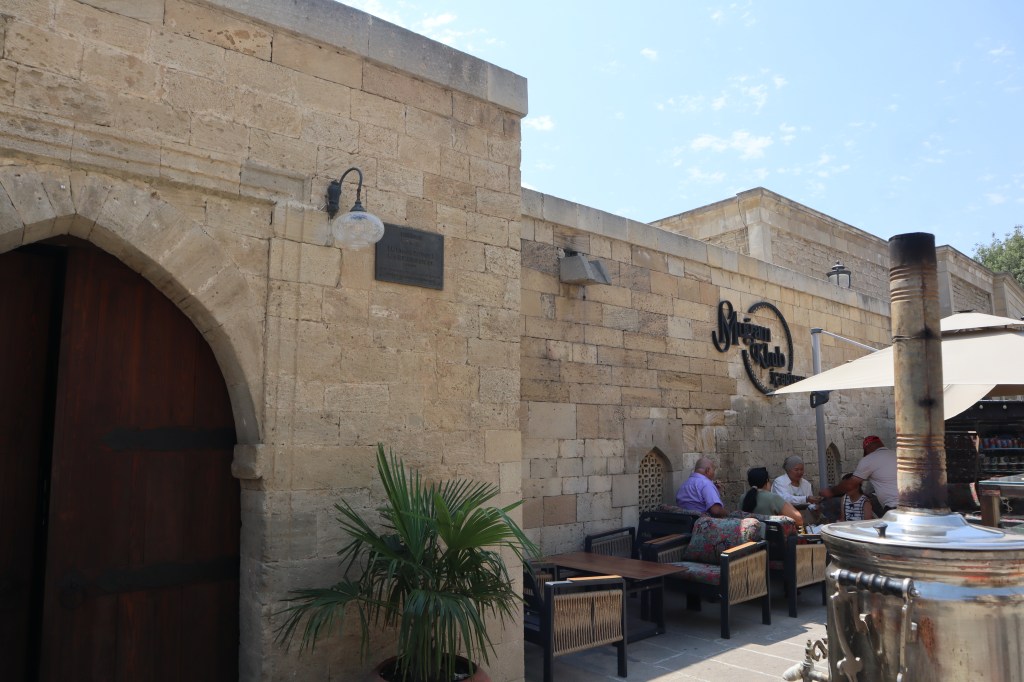
Nearby stood the **Bukhara Caravanserai**, where merchants arriving from Bukhara in Central Asia once stayed.
I immediately went inside the building, which is said to have accommodated Indian merchants. The strongly built structure has survived remarkably well and now houses several small businesses. I learned that the horses and camels that carried merchandise were kept near the city, where facilities provided them with food, water, and care.
Thinking about those ancient merchants and the thousands of kilometres they travelled filled me with admiration.
We visited during summer. Warm winds blew in from the Caspian Sea, and even walking a considerable distance was difficult for us. I found myself wondering: ” How difficult must life have been for those merchants who carried silk from China, spices and jewellery from India, and many other precious goods across Central Asia and around the Caspian Sea towards Europe? “
Along the way, they had to ensure not only their own food, water, and safety, but also enough fodder and water for their camels and horses. Deserts, mountains, bitter cold, intense heat, bandits, and disease—how many dangers must they have faced along the way?
In the early period, **Zoroastrianism** was an important religion in this region. Later, as Islam spread in the seventh century, society and commercial structures changed considerably. At different times, Muslim, Jewish, and other trading communities participated in commerce throughout the Caspian region.
Today, not only the Palace of the Shirvanshahs but also Baku’s entire old walled city is protected as a **UNESCO World Heritage Site**.
Baku was not always the Shirvanshahs’ capital. For a long period, their principal centre was ‘’Shamakhi’’. After earthquakes struck the region and political changes followed, Baku gradually became more important.
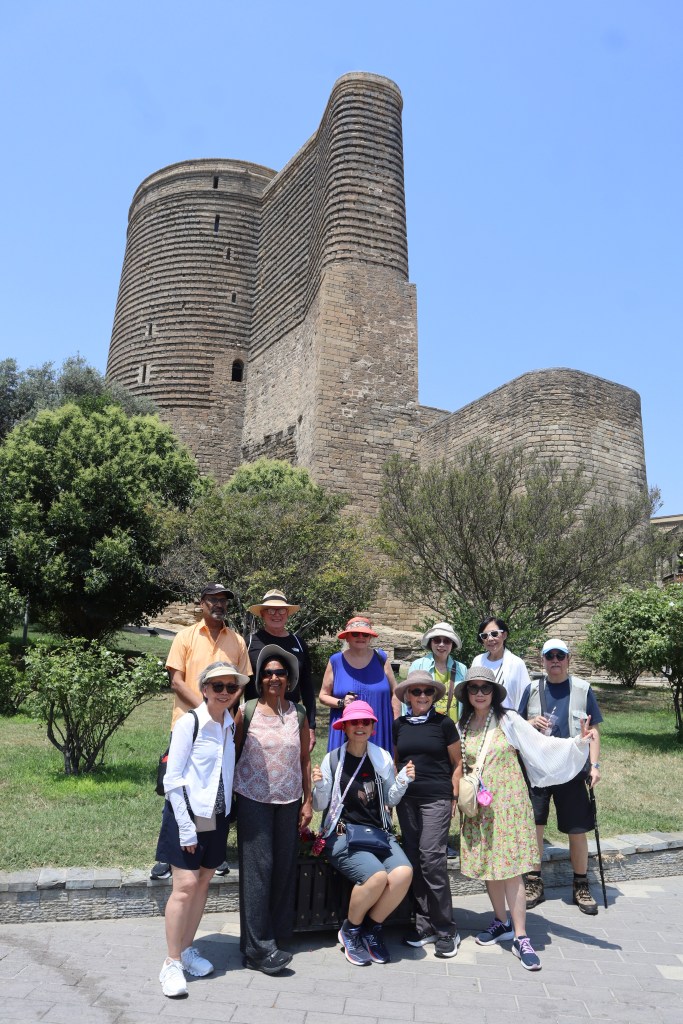
The Palace of the Shirvanshahs in Baku is now a museum, and you can also see the tombs of members of the royal family there. Nearby stands the famous ‘’ Maiden Tower “, rising above the old city like an ancient watchtower.
According to a popular story about the origin of its name, a young woman born into the royal family fell in love with a man whom she was forbidden to marry. In despair, she climbed to the top of the tower and took her own life. After this tragedy, the tower became known as the Maiden Tower.
From there, we went to another place that fascinated me—the ‘’ Museum of Miniature Books’’.
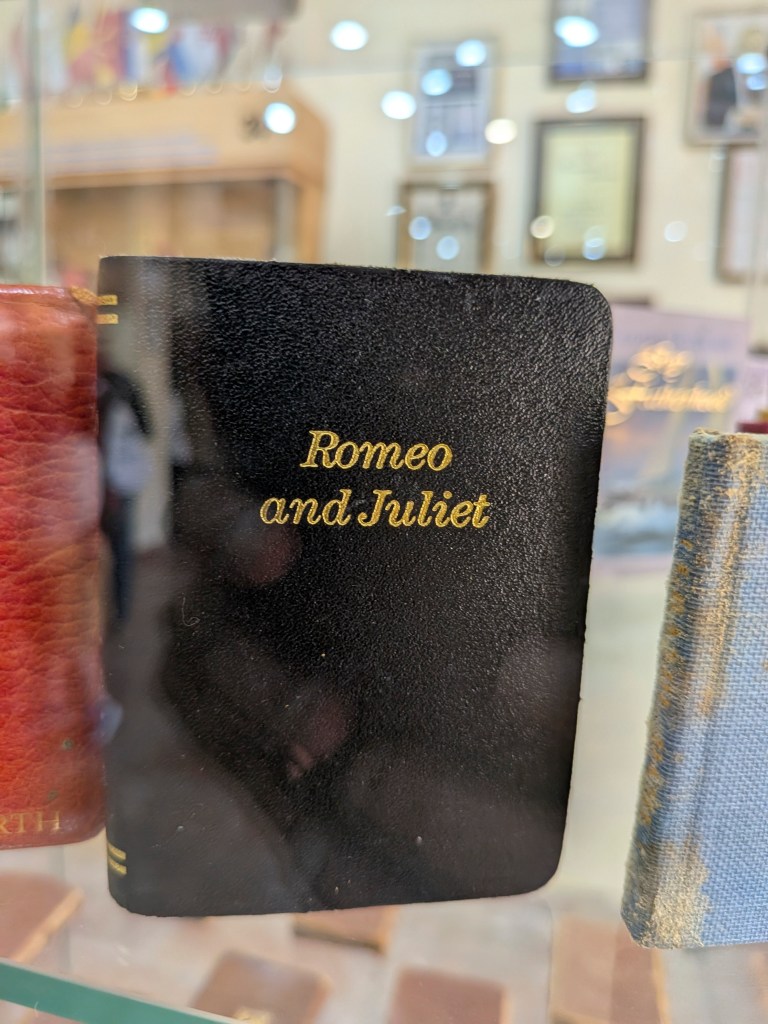
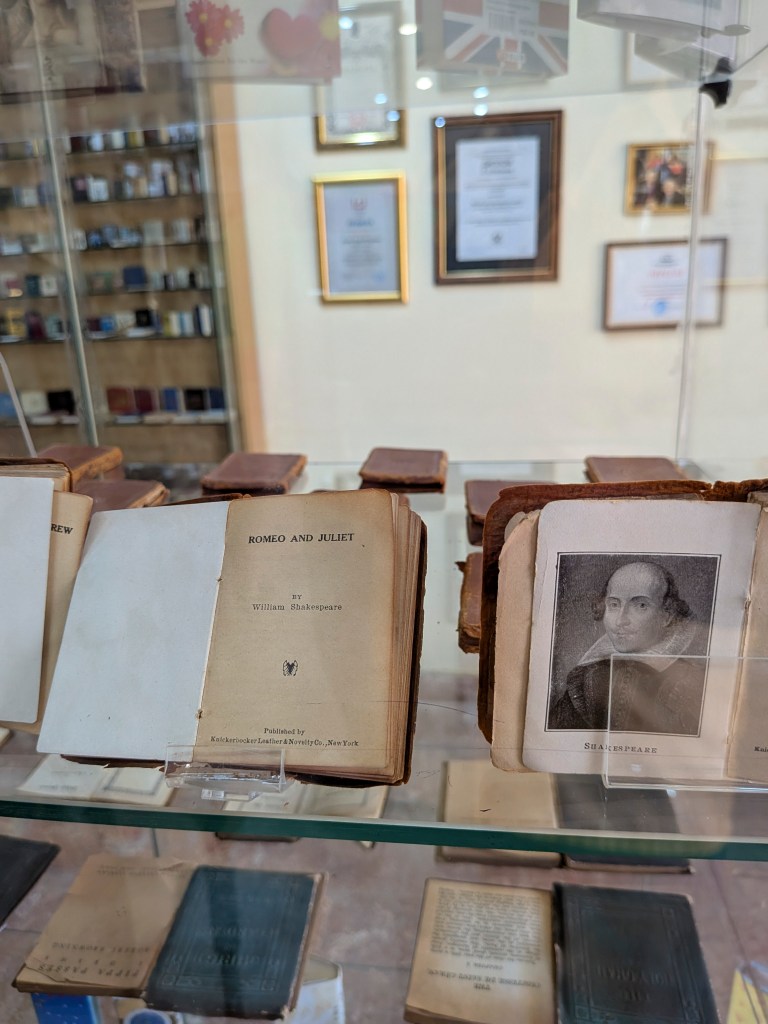
Thousands of tiny books collected from countries around the world are displayed there. ‘’Zarifa Salahova’’ established the museum based on her personal collection.
Among its exhibits were miniature editions of works by famous Russian literary figures such as Pushkin, Dostoevsky, and Gogol, as well as works associated with international literary figures such as Shakespeare and Rabindranath Tagore. They also displayed miniature versions of the Bible and the Qur’an. The smallest book I saw was no larger than my fingernail. I photographed it and later enlarged the picture to examine it properly. Many of the books seemed impossible to read without a magnifying glass.
The books were meticulously arranged according to country. I wished I could have spent several hours there, examining them one by one. Unfortunately, time did not permit it. I hurriedly took a few photographs before we had to leave.
Our final destination that day was the **Heydar Aliyev Centre**, which we had admired from outside on our first night in Baku. Designed by the internationally renowned architect Zaha Hadid, the building is named after Azerbaijan’s former president, Heydar Aliyev.
The building was astonishing from the outside, but its interior offered an equally impressive museum experience.
One section displayed traditional Azerbaijani musical instruments. Digital recordings demonstrated the distinctive sounds produced by each instrument. When we stood in front of an instrument, we could hear it in action. I particularly enjoyed this feature.
There was much more—modern art, different styles of traditional women’s clothing, dolls, paintings, and many other striking exhibits. On our first night, we admired the building’s beauty from outside; the next day, we entered and discovered Azerbaijan’s culture and history within.
When we returned to the Caspian waterfront, Baku was illuminated so brilliantly that night seemed to have turned into day. The buildings glittered like stars.
The oil and natural gas beneath and around the Caspian Sea have brought enormous wealth to Azerbaijan. At the same time, people there told us about the environmental damage to the Caspian Sea associated with oil production.
Azerbaijan’s oil is important not only today but also historically. During the Second World War, the oilfields of Baku supplied a substantial share of the fuel the Soviet war machine needed. This enormous petroleum wealth also made Baku an important strategic target for Hitler’s forces.
Our guide told us another interesting story. According to him, Joseph Stalin once said:
“Let us take the oil from the land now and leave the oil beneath the sea for the future.”
I do not know whether this is a historically authenticated quotation. But as I stood looking across the Caspian Sea and listened to the story, it seemed to me that Baku’s past and present were meeting in the same place.
Once, camels and horses passed through this city carrying silk, spices, and other precious merchandise. Today, the wealth of the same city emerges from beneath the land and the sea and travels through pipelines, via Turkey, towards Europe.
‘’The goods have changed.’’
The routes by which they travel have changed.
But Baku’s importance as a bridge between East and West has not changed. ‘’
 Noelnadesan's Blog
பின்னூட்டமொன்றை இடுக