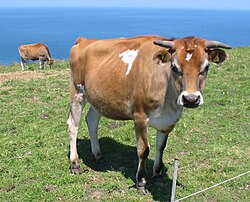
Ayanavaram, now a bustling part of Chennai in South India, was once a fertile hamlet. It was surrounded on three sides by a small range of hills and on the fourth by a lake brimming with water. In the middle of this landscape stood a dairy farm spread over about 150 acres, where goats and chickens were also reared. During the rainy season, when the lake overflowed, fish sometimes swam right up to the doorstep of the farm bungalow.
I had the opportunity to live and work in this beautiful setting for a couple of years from 1984, after fleeing Sri Lanka because of the ethnic conflict.
The farm owner visited occasionally on weekends. I was employed as both the veterinary surgeon and the farm manager. About fifteen men and women from the neighbouring village worked there from eight in the morning until six in the evening.
Milking the cows was mainly the responsibility of Ramasamy Konar, a young man of about twenty-five from the traditional herdsman community. He became my Man Friday. Apart from me, no one knew the hundreds of cattle on the farm better than Ramasamy.
In Tamil Nadu, it was customary to give cows names based on their colour, temperament, appearance, or sometimes even the names of gods and goddesses.
There were several bulls on the farm. Soon after I arrived, we bought a Jersey bull called Mookan. We also had a Jersey heifer named Letchumy, but despite repeated attempts, she failed to become pregnant.
The Jersey breed originated in the Channel Islands, and the hot climate of South India was not always ideal for these animals.
One day, while examining Letchumy’s reproductive tract through the rectum, I asked Ramasamy to bring me a cake of savarkaram, the Tamil word for soap.
He stared at me blankly.
I repeated the request, this time using the English word “soap.”
Immediately, his face brightened.
“Ah, soap! Why didn’t you say that, sir?”
To my surprise, he insisted that soap was a Tamil word.
I laughed. It was one of my early lessons in how thoroughly many English words had been absorbed into everyday Tamil in Tamil Nadu.
As I continued examining Letchumy, Ramasamy suddenly said, “Sir, Letchumy is like my wife. Neither of them gets pregnant.”
I stopped and looked at him.
“Why? What is the problem with your wife?”
“For five years,” he said, “she hasn’t had the good fortune to have a baby.”
I explained to him that infertility was not necessarily a problem with the woman. The cause could also lie with the man, and both husband and wife should be medically examined.
Ramasamy was not convinced.
“There is nothing wrong with me, sir,” he declared confidently. Then he added that his mother was already urging him to marry another woman.
“If you want to marry another woman, don’t hide behind your mother,” I told him. “First, go and see a doctor.”
He smiled sheepishly, but said nothing more.
My examination of Letchumy showed a follicle developing in one of her ovaries, suggesting she was cycling normally. I then collected semen from Mookan and sent it for laboratory analysis. When the report came back, it showed that the bull’s sperm count was low.
So, the problem was not Letchumy after all.
I obtained semen through the Agriculture Department and artificially inseminated her.
About three months later, it was time to examine Letchumy again to see whether she was pregnant.
“Ramasamy, bring me a cake of savarkaram,” I called out.
He turned towards me with a grin.
“Oh! Soap, sir!”
This time I laughed. I had apparently learned another Tamil word in Tamil Nadu.
After examining Letchumy, I withdrew my hand and looked at him.
“Ramasamy, she’s pregnant.”
His eyes widened.
“Is it so, sir?”
“Yes,” I said. Then, after a brief pause, I added, “Now it’s your turn. Go and see a doctor.”
For once, Ramasamy had no answer.
He lowered his head, embarrassed, while I tried not to smile.


மறுமொழியொன்றை இடுங்கள்