On a freezing winter morning in Melbourne, gusty winds sent an icy chill through my bones. I stood shivering outside the Magistrates’ Court, silently cursing an Egyptian man named Ibrahim.
The cold, combined with my irritation at being there, made me increasingly impatient. Yet I had little choice but to wait until my name was called as a witness. Knowing that I might be questioned in court, I began arranging the events in my mind in chronological order. At the same time, I wondered how on earth I had become involved in this case.
As I waited, the whole episode began replaying in my mind like a film.
It had started on a busy Sunday at the veterinary hospital. I had a full list of appointments with sick animals. Among them was a lamb.
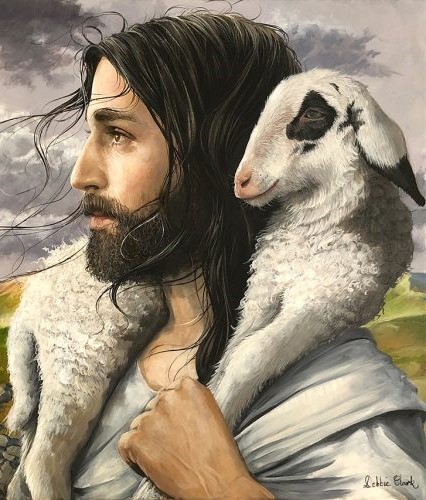
An Arab-looking man entered the clinic carrying a white lamb tightly against his chest. With his prominent nose and beard, and the lamb cradled in his arms, he reminded me of a figure from a medieval church painting.
I asked him to place the lamb on the examination table. As I examined it, I casually asked what had happened. His heavily accented, broken English made his explanation difficult to follow at times.
I soon noticed several infected wounds just above all four hooves. They were badly inflamed and oozing blood-stained fluid. The wounds had obviously been there for some time and had become severely infected. The smell was so unpleasant that I instinctively turned my face away.
I gently questioned him about how the lamb had ended up in such a condition.
He explained that he had tied all four legs with rope to prevent the lamb from escaping and getting lost. The constant friction of the rough rope had cut into the skin and caused the wounds.
I could hardly tell him outright how foolish his actions had been. Instead, I gently explained that a lamb should never be restrained in that manner. I cleaned all four wounds thoroughly, applied medication and gave him instructions for further treatment before sending him home.
I thought that was the end of the matter.
Two weeks later, an RSPCA inspector arrived at the hospital and introduced himself as Alexander. He told me that he was investigating a case of animal cruelty.
He showed me several photographs of lambs taken from different angles and asked whether I could identify one of them.
To me, they all looked remarkably similar. I could not confidently identify the particular lamb I had treated. However, I told him about the man who had brought a lamb to the clinic a couple of weeks earlier. I described the festering wounds around its legs and gave the inspector a copy of my clinical report.
He then asked whether I could identify the man if I saw him again.
I gave him as much of a description as I could. I remembered the beard particularly well; it had reminded me of Jesus in an old religious painting. I also remembered his name—Ibrahim.
By then, my curiosity had been aroused.
“Why are you asking all these questions?” I asked.
The inspector then told me the rest of the story.
The lamb actually belonged to a man named Saleem, a friend of Ibrahim’s. Because of a back injury, Ibrahim apparently found it difficult to use a lawn mower. So instead of mowing the grass himself, he allowed the lamb to graze in his backyard.
The lamb had become his living lawn mower.
That arrangement might have worked well enough for both man and lamb—except that Ibrahim was afraid it would wander into neighbouring gardens. Whenever the lamb was not “mowing” his lawn, he tied all four of its legs with rope to stop it from escaping.
A neighbour saw the lamb restrained this way and reported it to the RSPCA. The lamb was seized and transferred to an animal shelter, and Ibrahim was charged with animal cruelty.
And that was how I ended up standing outside the Magistrates’ Court on that freezing Melbourne morning.
My legs ached, I was cold, and I was becoming increasingly annoyed at the time I was wasting simply waiting to give evidence.
Eventually, Inspector Alexander came towards me.
“You won’t be needed,” he said.
“Ibrahim had pleaded guilty. The magistrate fined him $800, and he paid it on the spot.”
I walked away from the court feeling relieved, but one thought kept amusing me.
For much less than $800, Ibrahim could have bought himself a perfectly good lawn mower. And the lamb could simply have remained a lamb.


பின்னூட்டமொன்றை இடுக