The Australian healthcare system is regarded as one of the world’s best, providing all Australians with equal access to medical facilities regardless of social or financial background. Those requiring additional care can opt for private insurance to meet their needs. This system has contributed to higher life expectancy among Australians, many of whom are octogenarians. Medicines help maintain their physical health, but not their central nervous systems or cognitive functions.
It has become a common practice to place cognitively impaired Australian elders in aged care facilities, even if they are physically healthy. We also have good aged care facilities in this country.
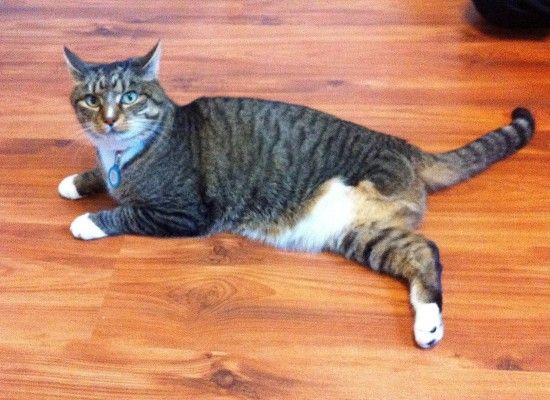
Recently, I visited a nursing home to care for Sox, a cat with ongoing medical needs. Sox has been a companion pet for the elderly in the nursing home for nearly 10 years and is brought to my clinic every year for check-ups and vaccinations.
During my recent visit to the clinic, I was informed that Sox had been refusing to eat. Upon examination, I discovered sores throughout his mouth and gums. Following a thorough checkup, I conducted a full blood test, which revealed that Sox was infected with feline immunodeficiency virus (FIV), akin to AIDS in humans. This virus in cats is typically transmitted through bite wounds.
FIV weakens the cat’s immune system, making Sox more vulnerable to infectious diseases, but it doesn’t usually cause death. This often leads to the cat developing various illnesses. If Sox were to develop an FIV-related infection, I advised that euthanasia would be the best option after I finished cleaning his teeth and started him on antibiotics.
After my last conversation with the staff at the nursing home, I was informed that Sox had diarrhea. Usually, visitors with diarrhea are not permitted inside to prevent the spread of infection among the elderly. The staff caring for the seniors adored Sox. When I scheduled Sox’s euthanasia for health reasons, the nurses and staff there asked me to perform the euthanasia in their presence. I initially agreed, but later felt uneasy.
This morning, I visited Sunrise Nursing Home in the neighbouring suburb of my clinic. The name seemed ironic, considering the elderly residents were clearly in their final years. Perhaps the owner intended the name ‘Sunrise Nursing Home’ as a dark joke.
I saw a notice at the entrance: “Those with diarrhoea, please do not enter.”
The staff at the nursing home welcomed me, and I submitted a report confirming I was disease-free. I observed the residents and noticed a designated room for those in pain. Peering inside, I saw a man crying out loudly every two minutes, his wails echoing through the entire facility. Because he was kept in solitary confinement, other staff members couldn’t attend to him. Each room housed eight elderly men and women; one woman sat slumped in a chair, her head hanging as if skin alone supported it. She struggled to keep her legs apart and lacked the strength to hold her head up. Another woman, scantily dressed, clicked her twisted fingers, while an elderly man kept his mouth wide open. An African woman attendant was feeding him, seemingly able to handle the task easily.
These elders must have been incredibly talented in the past, and these ladies likely led fascinating lives at their peak! When I imagined their later years, it felt as if an insect had entered my mind. I desperately tried to shake it out.
Mrs Stewart, one of the supervisors, came to my aid, apologising for being late. She directed me to Sox’s location, where I saw him sleeping peacefully, curled up. As I approached, Sox lifted his head for a brief glance before returning to sleep. I preferred not to end Sox’s life through euthanasia or cause him pain at the Nursing Home. I reassured the caregivers that I would give him anaesthesia and cover the expenses. Mrs Stewart agreed, and the others did not object.
After anesthetizing Sox, he started breathing softly. When I gently touched his eyelids, he did not react, indicating the anaesthesia worked as intended. I then carried Sox and placed him in the box I had brought, later setting the box on the seat beside me after reaching the car.
By then, the car had moved past the side road and onto the main road. Seeing Sox at peace, forever at rest, I reflected on those who remain behind—people who lose their senses and are left only with their souls in old age. This made me ponder whether the cat, quietly accepting death, was somehow more fortunate.
I thought about the story of Siddhartha Gautama—later known as Gautama Buddha—who sat under a Bodhi tree meditating after witnessing a sick man, an old man, and a dead man. Is this considered an epiphany?
I kept my memories in check and drove to my clinic. As my nurse mentioned on the phone, a few more patients were waiting there.
l


மறுமொழியொன்றை இடுங்கள்