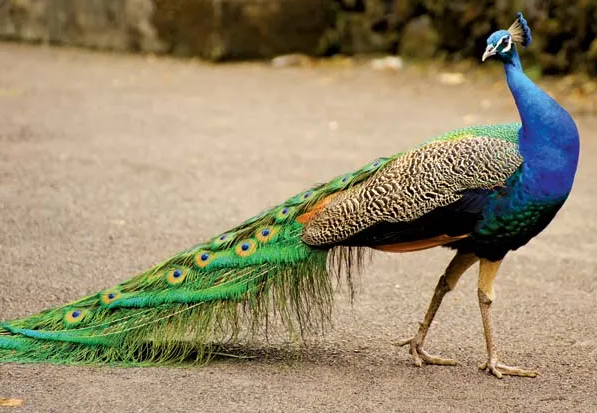
Getting calls at odd hours is common in my veterinary work, as cats and dogs can get sick at night. However, this call was particularly unusual because it came from Carrum Downs’ largest Hindu temple in Melbourne. They asked me to examine the temple peacock, who was unwell. Such requests are part of veterinarians’ charitable duties, often unpaid. Unsurprisingly, the Hindu community also hoped I would help in the name of divinity.
Unaware of its importance, my daughter asked why there was a peacock at the temple. My wife explained that the peacock is Lord Muruga’s vehicle. I thought that the ‘rat’ and ‘ox’ could also be seen as vehicles, since they are Lord Ganesha’s and Lord Shiva’s modes of transport. If the temple started to include these animals as symbols of the Gods, it would turn into a zoo, rivalling Melbourne Zoo. I kept this thought to myself, knowing it might be seen as heresy by the ‘believers.’ Religious beliefs are deeply personal and often irrational, beyond the reach of logic and science.
I explained to my daughter that the temple authorities are maintaining the peacock for its aesthetic appeal.
Accompanied by my family, I visited the temple the next day to accomplish two tasks at once. I planned to tend to the temple peacock while my family prayed to the Lord. My wife and daughter went inside to pray, and I approached Mr. Rangaiah, a friendly and humble South Indian who cared for the peacocks and peahens.
I accompanied Mr. Rangaiah to observe the peacocks and inspected the metal enclosure where they were housed. The enclosure was constructed from steel rods and wire mesh. Additionally, there was a small shed used by the peahens for laying their eggs.
Mr Rangaiah pointed out the peacock with the injured leg. I internally wondered, with slight amusement, if it was the unfortunate consequence of the peacock carrying Lord Muruga and His two consorts on its back. According to Hindu legends, Lord Muruga rode his peacock to win a race around the Universe against his brother Lord Ganesha, who cleverly won by circumambulating their parents, Shiva and Parvathi, and calling them his Universe, thus claiming victory.
Mr Rangaiah, a Tamil from India and a skilled cook, prepares food for devotees during festivals with such speed that even the legendary cook King Nalan from the Nalan Dhamayanthi story in the Mahabharatha would be impressed. When he mentioned he hadn’t faced any issues with peacocks in the past ten years, I responded that peacocks rarely fall ill, as they usually live about thirty years in good health. I accompanied Mr Rangaiah into the enclosure and saw that the peacock had an external leg injury. After administering antibiotics, I left.
Next week, I visited the temple and noticed that although the peacock’s external wound had healed, it still couldn’t walk. It was lying in a corner among several eggs, suggesting an internal injury. Rangaiah had told me it was the oldest peacock, and the many eggs indicated it was the breeding season.
Haven’t you seen the peacocks copulating?
I remember a scene from my jungle trip in Sri Lanka: a peafowl chased a peahen until she was exhausted, then the peafowl mounted her to mate.
When I looked around the enclosure, I saw five peahens and seven peafowls. I remembered reading somewhere that one peafowl could cope with five peahens.
An alarm bell rang in my head!
Another Kurukshetra war took place inside, not for Panchali, but for peahens.
In the open, peacocks spread their wings and dance for several minutes to attract peahens. Is it fair to assume a peacock in a temple is celibate? One peacock was harmed when seven others attempted to mate.
I returned to the enclosure and crouched in front of the injured peacock. We shared a silent exchange!
Hello, I’m the veterinarian. I’m here to assist you. Can you tell me what happened? Please be honest with me!
The peacock looked up and said, “I am the eldest in the enclosure. The young ones are f**king a lot here, and this year I haven’t had a single chance. Out of frustration, I flew over a peahen and slipped while trying to mount her. I struck my leg, and now I’m crippled.”
“Look! You’re ten years old! Why can’t you behave more orderly?”
“We have spent over thirty years living in the open forests, and these ten years are nowhere close to that.’
Avoid being overly impulsive. Maintain self-control and restrict your sexual activity after entering the temple and dedicating yourself to serving in this sacred environment.
“We often feel confined throughout the year, but with the arrival of summer and the increase in our blood and testosterone levels, we lose our composure; sunlight acts like Viagra for us. We find it impossible to rest or sleep. Instead, we seek out peahens; it’s beyond our control!”
“I know, I am a veterinarian, Mr. Peacock! Your pineal glands are being stimulated in your brain without your awareness, OK!”
‘Let’s monitor the situation for a week. If Rangaiah’s medicine proves ineffective, you’ll need to choose between Kailasam of Lord Shiva and Vaikundam of Lord Vishnu as your ultimate refuge. Regardless of the outcome, I intend to offer a renewed prayer to Lord Muruga to help you.’
I said the final part aloud to the peacock.
Although the playful imaginary conversation ended, I was still touched by the peacock’s appearance and felt sympathy, as its chances of recovery and survival appeared very slim.
Shravanabelagola is a hillock near Mysore, India. Historically, Jain saints spent their later years there, meditating, preaching, and teaching, eventually attaining Samadhi. Likewise, the temple management might have thought that if the injured peacock died in that enclosure, it would reach the abode of Lord Shiva in Kailasam.
In my personal capacity, I researched animal treatment methods grounded in Western science. I found management’s faith-based beliefs discordant. I openly told the temple management that the peacock required ‘euthanasia’ to ensure it died peacefully and avoided suffering. I requested a letter of authorization to carry out this action, but they did not respond for several weeks.
Later, I visited the temple to inquire about the peacock and was informed that it had attained Samadhi, similar to Jain saints. Its body had been left outside, following the customs of Persian and Zoroastrian traditions. I wished I could have provided it with a proper Christian burial.
It was festival time, and in that festive spirit, the poor peacocks might have been forgotten!
Is it possible for a peacock to file a lawsuit and pursue justice for ‘animal rights’? Alternatively, could they at least make a statement to the press?
In the future, clashes among peacocks are likely during mating season. Poor peacocks! I wish they knew they could sustain serious injuries if they don’t refrain from mating.
Besides the humour, I advised the temple authorities against keeping wild birds in tiny, confined spaces that likely limit their natural movement, or suggested they stop this practice entirely. I also mentioned that I will no longer serve as your veterinarian in the future.


பின்னூட்டமொன்றை இடுக