By Nadesan
Seeing someone with tattoos always reminds me of a medical textbook I read years ago. It warned that hepatitis could spread through tattooing due to the frequent use of contaminated needles.
Back then, tattoo artists often reused the same needles on multiple people without proper sterilisation. It was also common for travellers returning from abroad to get tattoos as souvenirs.
In the past, sailors and local tough guys often proudly showcased intimidating tattoos on visible areas of their bodies. I remember as a child seeing a neighbourhood bully with a dagger tattoo on his shoulder, which made a lasting impression of him as a dangerous person.
Those days are behind us. Tattooing has become accessible to everyone, similar to the right to vote. It is no longer exclusive to men; women now also participate fully.
Tattoo studios have evolved significantly. They are now found in trendy city-centre venues lit by neon. Traditional hand-held needles have been replaced by electric tattoo machines. Modern tools are sterilised to meet medical standards, and tattoo artists are now regarded as body artists.
Some years ago, one of my clients, a tattoo artist who regularly brought his dog to my veterinary clinic, invited me to visit his studio. I intended to observe his work, but for reasons I no longer remember, he stopped coming to the clinic.
Today, tattooing is a widespread fashion trend in Australia, particularly among the younger generation. Many individuals see their bodies as a canvas for self-expression, choosing tattoos as a personal form of art.
However, visible tattoos remain frowned upon in certain professional environments, which can negatively impact job interview prospects. Consequently, many individuals regret getting tattoos in their youth and opt for expensive laser removal.
A young woman once tattooed her boyfriend’s name on her body. After they split up, she had it removed, which left a noticeable scar. Luckily, it was on her hip, where she could hide it with clothing. She later married someone else and started a family. One might wonder what her body would look like if she kept tattooing her lovers’ names.
This style, originating from Europe and the USA, has since gained popularity among young people in India and Sri Lanka. Fortunately, my children have not shown any interest in tattoos, which has always pleased me as a father.
However, meeting John Gallagher changed my long-standing prejudice against tattoos. I still wouldn’t get one, but I stopped seeing tattooing as fundamentally bad. Even at sixty, beliefs and attitudes can evolve. All it took was witnessing John Gallagher’s tattooed fist. It became for me what the Bodhi tree was—where understanding first arose.
Recently, I met a man named John Gallagher, and hearing the story behind his tattoos softened my long-standing opposition to tattooing. While I still wouldn’t get a tattoo myself, I no longer see it as inherently negative. Even after sixty, beliefs, opinions, and convictions can evolve. A small incident taught me this important lesson.
For me, John Gallagher’s tattooed fist became the Bodhi tree under which enlightenment dawned.
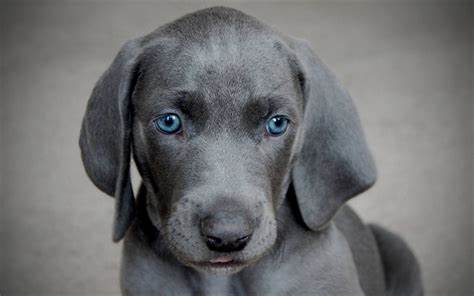
It was a Saturday morning when John brought in a rare blue Staffordshire Terrier puppy for vaccinations. Although I knew the breed could have this color, it was the first time I had seen one like this.
The puppy was strikingly beautiful, confidently posing on the examination table much like a graceful young woman who knew she was the focus of everyone’s attention.
“This puppy is not only beautiful,” I told John, “But it’s very smart as well.”
I took a photograph on my phone and told him I intended to post it on Facebook.
“That’s true,” John said with a smile. “Ever since this little guy joined our home, he’s filled our family with happiness.”
Until that moment, we only talked about the puppy. But when he said those words, I paused my activity and looked at him more carefully.
John was tall, over six feet, with vivid blue eyes and looked to be around thirty-five to forty years old. He spoke with a slight stammer.
It was summer, and he was dressed in a sleeveless blue singlet. His arms and upper body were tattooed with various figures, symbols, and quotations in black and red ink, randomly scattered across his skin without any clear pattern.
On his right upper arm, there’s a Native American wearing a feathered headdress, with a sword below it. His left arm features a dragon and a striking snake beneath. To me, they seem like disconnected dream fragments—images lingering after the dream has faded. His body appears like a sheet of paper painted with every colour child could find.
He told me he had two sons, one aged eight and the other six.
“They both adore this puppy,” he said.
That’s wonderful, I said. Staffordshire Terriers are loving dogs. They’re usually healthy, but their short coats may lead to skin allergies, particularly in spring. Female dogs sometimes face challenges during birth due to the puppies’ relatively large heads.
“We’re not going to let him stay outside,” John said. “He’ll live in the house.”
We left the consultation room after administering the puppy’s vaccination and worming treatments.
John told my nurse Sharon, “The boys are with him all the time. At night, he even sleeps in my younger son’s bed.”
“And your wife doesn’t mind that?” Sharon asked.
Her innate talent for conversation shone through. After years of talking with others, she learned how to engage them effectively without causing discomfort.
John paused.
“I don’t have a wife,” he said quietly. “I’ve been raising the two boys by myself for the past six years.”
Both Sharon and I were taken aback.
Our privacy is sacred, as is that of others. However, newspapers, television, and even writers frequently profit from revealing it.
John merely mentioned that he had no wife, but those few words made us curious to learn more, much like a television episode ending that leaves viewers eager for the next part.
“Your situation is really tough,” Sharon said. “Especially with two children. I find it challenging enough to raise three boys, even with my husband helping.”
Watching Sharon, I continually learned the art of maintaining a conversation. More significantly, she knew how to gently enter someone else’s private world without causing pain or resentment. It took me back to my childhood, when we gently scooped out the soft flesh of a palmyra fruit with just a finger.
“I never wanted this life,” John said softly. “She was the one who left me. She didn’t need to be my wife anymore. Yet, even when I asked her to visit our son when he was ill, she never showed up.”
We were reluctant to inquire about his son’s illness.
After completing his credit card payment, John extended his right fist.
The number 2014 was tattooed across it.
“What does that mean?” I asked.
“2014 was the year my son was diagnosed with cancer in his chest. I’ll never forget it. I wanted to carry it with me forever.”
“I see…”
How can we possibly respond to such deep sorrow?
His left fist was still blank.
“When he’s completely cured, I’ll have the year tattooed on this hand as well.”
“How long will that be?”
The doctors mention that if he stays cancer-free for six years, they can be quite sure it won’t come back.
“A disease like that is extremely difficult,” I said. “Especially for someone so young. Suffering comes before a child has the chance to build the strength to handle it.”
“James is doing well at school,” John said, lifting the puppy into his arms. “He’s a very bright boy.”
“John, we wish you and your boys all the very best.”
After he left, Sharon turned to me.
“Can a mother really behave that way?” she asked.
“According to John, she did,” I replied. “But we’ve only heard one side. Like the two sides of a coin, we don’t know the other. We’re unaware of what happened between them. All we can say is that John is a devoted father.
“That’s true,” Sharon said. “Maybe she realised she wasn’t the right mother for those boys and decided to leave. If so, perhaps it was for the best.”
Having expressed her definitive stance on the matter, Sharon softly returned to her work.
After many years of marriage and collaborating with numerous women, I learned that conversations tend to conclude peacefully when you give the other person the final word.


மறுமொழியொன்றை இடுங்கள்