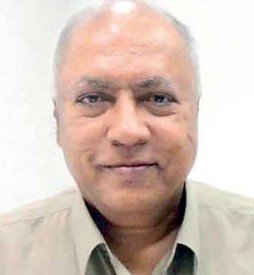
A seasoned journalist from the Sri Lankan Tamil community, he was far more than a reporter. He was a perceptive social observer whose work reflected both courage and clarity. His writing was defined by honesty—he remained faithful to his stories without embellishment or distortion. Even when one disagreed with his perspectives, his commitment to truthful reporting was never in doubt.
Remarkably, his readership extended across ethnic divides. Many of my Sinhalese friends would turn first to his articles before reading others in the paper. To earn such trust across Sri Lanka was no small achievement—it was a testament to his credibility and moral authority as a journalist.
I have been reading his work since my youth, encountering his columns in The Sunday Island, often from behind the Cadjan curtains. Those writings were eye-opening and helped shape my understanding of Sri Lankan society and politics.
Our paths continued to intersect over the years. After I migrated to Australia and he later settled in Toronto, he remained deeply engaged in Tamil political discourse. When I founded the Uthayam newspaper in Australia in 1987, we stayed in close contact, and I had the privilege of publishing many of his articles. Our conversations—whether in person during my visits to Toronto or over the phone—often revolved around the complexities and, increasingly, the decline of Tamil politics in Sri Lanka.
In recent years, he regularly shared his columns with me, especially after joining Facebook. While I occasionally commented on them, I would sometimes tell him that writing about certain Tamil politicians was a waste of his valuable time. He would acknowledge my view, yet continue—because, as he saw it, it was his duty as a journalist. In truth, he always went beyond duty. His knowledge of Sri Lankan politics was encyclopedic, and his writing style carried a rare warmth—like a wise elder narrating stories to the next generation.
On my earlier visits to Toronto, I usually met him outside—at a Tim Hortons or nearby shops. But on September 12 last year, he invited my wife Shiamala and me to his home. While Shiamala and Darshini chatted, we spoke at length about politics. With my medical background, I sensed his declining health; his mobility was clearly affected. Yet I never imagined we would lose him so soon.
We spoke a few times after that visit, though not in the final two months. He continued sending me his articles until March 25—the last one on Tamil singer Sounthar Rajan. I was travelling in Italy at the time and could not respond. On returning to Melbourne, I realised with deep regret that I had not reached out to him again.
His passing is not only a great loss to the Tamil community but also a deeply personal one to me. His work influenced my own writing, including the introduction to my first novel and my veterinary narratives.
We are unlikely to see another journalist of his stature and integrity anytime soon.
My heartfelt condolences to Darshini and her extended family.


பின்னூட்டமொன்றை இடுக