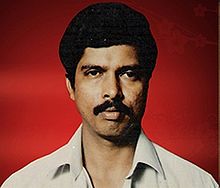
In unstructured armed movements claiming to be democratic, internal splits and self-destruction are as natural as a defective foetus being expelled from its mother’s womb. It is Darwinian natural law: the strong survive, the weak perish.
This Darwinian principle equally applies to Sri Lankan Tamil politics. While many say the LTTE destroyed the fraternal organisations, that is an exaggeration. What is true is that the Tigers hunted down the individuals in those movements.
You might ask — what’s the difference?
The other movements had already fallen apart due to internal conflicts. Those familiar with the history of these groups will understand. The Tigers’ crime was to hunt down and burn alive young men who had joined only for the cause of national liberation. Those crimes haunted the Tigers like a shadow. In the end, what they had inflicted on others was returned to them by the Sri Lankan state.
For some, it ended differently. Kittu and Mathaiya, who had killed TELO youths, did not die peacefully of old age. Likewise, at Mullivaikkal, Prabhakaran could not have avoided thinking of Sri Sabaratnam’s last moments. Perhaps he might have even told a Sri Lankan army commander, “I’ll try to talk to Rajapaksa.”
In 1986, TELO, then a strong movement, split into two factions and started to destroy itself. I saw and heard this while in India, and I tried a bit to stop it. That was when I understood the meaning of the Tamil proverb kedukudi sorkkeladhu — “a doomed household will not heed advice.”
Thinking back on those days is like the bitter taste of the purgative medicine I once had for diarrhoea at night, rising back into my mouth.
In 1986, Dr. Sivanathan and I, while working at the Tamil Medical Centre, also became involved in what in Indian Tamil might be called kattai panchayat work and in our Jaffna Tamil, oor vidhanai work — matters of arbitration and mediation. These weren’t tasks we chose, nor were they part of our professional skills. They didn’t bring us any money but often caused us mental stress and led us to spend our pocket money on drinks at the end of the night.
I can’t recount my memories of India without mentioning alcohol.
There is a difference between Sri Lankan and Indian liquor. In Sri Lanka, even moonshine arrack is distilled with care, especially the southern arrack from the Tangalle region — better than today’s single malt. But in India, not everything was drinkable. At the time, there were no imported foreign liquors. The Indian whisky that suited us was Royal Challenge. It was expensive. Whisky is supposed to be distilled from barley, but Royal Challenge was mostly spirit from sugarcane, which should properly be called rum or arrack. India does not grow barley, but it produces plenty of sugarcane. They blended imported barley spirit with sugarcane spirit. Back then, it still seemed good to us. I also smoked in those days.
Our arbitration work came in many forms.
I can’t provide names, so I’ll describe the types of cases we handled.
We often assisted men and women eager to travel from Sri Lanka to Europe via Chennai. At the time, due to internal splits within the movements, one group consisted of those who had fallen out with their own organisations, and another was survivors of organisations destroyed by the Tigers. Both groups were desperate to leave Chennai. False passports and exit permits were in high demand.
Once, a militant organisation in Chennai kidnapped a man’s wife and child, who were involved in the drug trade, to extort money. She came to us in tears, and we helped reduce the demanded amount to a fraction.
A friend of ours later travelled to Canada using a British passport. Even years later, in Melbourne, when the magazine Rhymes arrived in the mail, I remembered how, once, a British passport belonging to an African man had been sent inside the centre pages of Time magazine. The Tigers trained ten groups in Tamil Nadu. Many deserted from the final group. We helped those who deserted and those who had fled punishment.
We even became involved in love affairs — the most complex cases of all. Because I was living with my family, most cases did not come directly to me. Many came through Dr Sivanathan, but they often ended up as our joint problems. When internal disputes arose within the movements, they found their way to us — and sometimes we sought them out.
—-
On 6 May 1986, Sri Sabaratnam was killed — exactly a month before the incident I am about to describe.
It was ten o’clock at night in Chennai, a city alive with lights, noise, dust, and smell. I was riding my old TVS 50 moped home from the Liberty Theatre area. Near the EPIC information centre, I saw Padmanaba, leader of the EPRLF, walking towards me in black trousers and a white shirt, his face full of thought. It was unusual to see him walking alone; he was usually with someone.
“Looks like there’s trouble in TELO. Things don’t seem good between Thas and Bobby,” he said, referring to TELO’s two military commanders.
“I think so too,” I said. “Shall we go to see Siri?”
When I nodded, he immediately got on my moped. Without a helmet, we rode slowly — not that the old TVS could go fast. On the way, I asked, “Do you have any weapons for protection?”
“No, comrade. Why should we be afraid?”
My body stiffened, and my heartbeat sped up. The TVS crawled along like a snail. Should we take a shortcut? I fell silent, but my mind was restless. By then, the movements had already started killing one another on Indian soil. Some were abducting rivals to the seashore, tying them to stones, and tossing them into the deep without a trace. This man had no concern for his own safety—and I was now involved too.
We finally reached the TELO office in Saligramam around 10:30 p.m. From the neighbouring house, Siri Sabaratnam came over carrying a child—the son of a TELO member who had already been killed. It was my first time seeing him in person. I remember his blue coat-shirt.
Padmanaba and Siri talked until four in the morning. I listened quietly, hoping this meeting would lead to a peaceful resolution.
Padmanaba’s advice, in essence, was: “Settle your internal disputes.” Siri nodded, saying he would go to the coast in the morning. I returned to Kodambakkam in the dark dawn, satisfied we had done something worthwhile.
But within a month, the Tigers attacked TELO. From an EPRLF wireless set, I heard a conversation between the Tigers in Adayar and those in the Eastern Province. Ganesh, Muthoor commander, was reluctant to kill more eastern cadres after so many had already been murdered in Jaffna — but the reply was a string of abuse sent crackling over the airwaves.


மறுமொழியொன்றை இடுங்கள்