Noel Nadesan
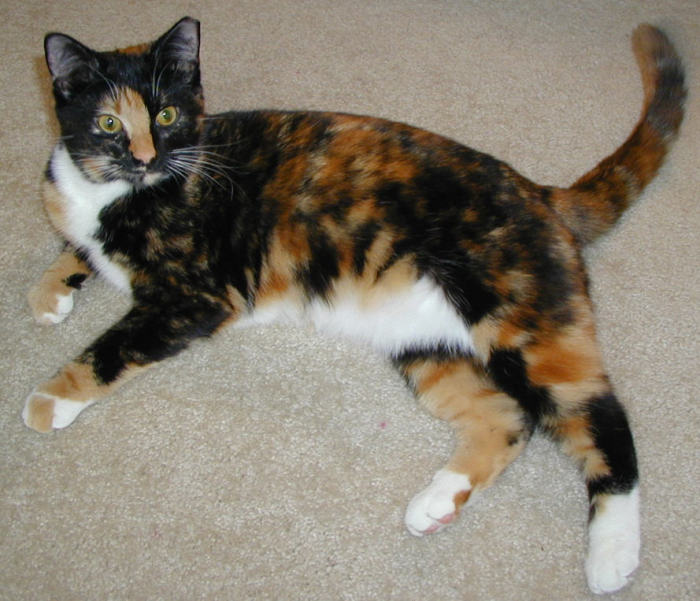
The Queen Story
She ruled no country, and no nation declared her birthday a public holiday. She was merely a cat named Queen—Rani, in Tamil. To everyone else, she was just another stray cat. But to me, she eventually became my queen.
It was around midnight on a bitterly cold night. I was preparing to close the veterinary hospital where I worked and head home when an animal ambulance arrived carrying a heavily pregnant cat in a small cage.
She was a stray, apparently searching for a safe place to give birth. Someone had found her hiding near a house. She had no microchip and therefore no clue to her identity or where she had come from. And what about the tomcat responsible for her pregnancy? In all probability, having satisfied his desires, he had disappeared without a backward glance, leaving my Queen to face the consequences alone.
Her plight reminded me of a poem I had read in my youth, *A Whore’s Lullaby*, with its haunting thought: “Like God, you too have no father.”
But let us leave the irresponsible tomcat out of the story.
Few people come forward to adopt an adult stray cat, particularly one about to give birth. Even the ambulance crew who brought her simply handed her over and departed. In those days, the usual fate of an unwanted stray cat brought to a veterinary hospital was euthanasia.
Marika, one of our nurses, thought otherwise.
“Let us examine her first,” she said. “Then we can decide what to do.”
Marika was naturally compassionate and deeply fond of animals. She already cared for several stray cats and dogs at home and always tried to find them good homes. Her devotion to animal welfare had even earned her recognition and awards.
When we examined Queen, we discovered that she was in serious trouble. A kitten’s head was protruding from the birth canal, but its neck was bent, preventing delivery. Queen was exhausted and in considerable pain. There was only one solution: an emergency caesarean section.
It was already around midnight. I should have been reaching into my pocket for my car keys. Instead, my hands reached for the surgical instruments.
Marika and I stayed behind. We gave up our overtime and operated on Queen.
Three kittens were removed. Sadly, one was already dead.
Afterwards, we agreed on a plan. Queen would remain at the hospital under our care for a week while we tried to find her a home. Marika would take the surviving kittens home and look after them until they were old enough to be adopted.
However, there was another problem.
My wife, who is a doctor, disliked cats. She firmly believed that cat hair contributed to asthma. When I suggested bringing Queen home, she rejected the idea immediately.
So, Queen remained at the clinic while I searched for someone willing to adopt her. A week passed, but no animal lover appeared.
Then fortune smiled on me.
My wife announced that she was taking our children to Sydney to visit her parents.
My better half left home—and my Queen moved in.
When my wife eventually returned and discovered Rani in the house, her expression changed dramatically. She wore a long face, as if Donald Trump had just been shown a photograph of the present Iranian leadership.
We already had a dog named Sandy, who until then had enjoyed a peaceful and carefree existence. Queen’s arrival disturbed that peace. To Sandy, it must have felt as though the Taliban had suddenly entered his territory.
War was declared.
For several days there were confrontations, suspicious looks and occasional skirmishes. Then, without negotiations, mediators or peace conferences, the two animals somehow reached a memorandum of understanding.
Hostilities ceased.
Sandy occupied his territory at the back of the house, while Queen established hers at the front. Each respected the other’s boundaries.
Human beings engaged in endless conflicts might have learned something from those two animals.
When a stone falls into a well, ripples spread across the water. After a while, they disappear, and the surface becomes calm again. Something similar happened with my wife’s opposition to Queen. Gradually, her resistance faded.
Queen became part of our household.
Whenever she was hungry, she rubbed herself against my legs. When contented, she climbed onto my lap and settled there as though it were her rightful throne.
To soften my wife’s attitude towards cats, I told her stories I had heard from my grandmother, as well as tales from ancient Egypt.
My grandmother had repeatedly warned me that harming a cat was as sinful as harming a Brahmin priest. In ancient Egypt, cats were sacred and associated with the divine.
Queen, however, was not always divine.
Cats may appear gentle and affectionate at home, but when hunting, they reveal another side of their nature. Queen was no exception.
Whenever she spotted a small bird in the garden, she transformed into a silent hunter. Despite the bell around her neck, she somehow managed to creep close enough to seize her prey.
One evening, returning home from work, I saw Queen locked in a life-and-death struggle with a bird. I had nothing resembling a weapon in my hand except the newspaper I was carrying, so I struck Queen lightly with it and rescued the bird.
Queen did not appreciate my intervention.
From that day onwards, she seemed offended. She approached me less often, and a certain distance developed between us. Perhaps I had betrayed her in her eyes. After all, hunting was part of her nature, while saving the bird was part of mine.
Some time later, we went away for our summer holidays and returned home shortly before New Year.
On New Year’s Eve, I sat watching the Sydney Harbour Bridge fireworks on television. During the celebrations, Queen came to me and jumped onto my lap.
I was absorbed in the spectacle. I gently pushed her away and let her outside, closing the door behind her.
When the fireworks ended, I should have opened the door and called her back inside.
But I was tired. I fell asleep.
The next morning—January 1—I looked for Rani.
She was nowhere to be found.
I searched the surrounding streets and neighbouring houses. I called her name repeatedly. I put up notices and offered a generous reward to anyone who could find her.
Days passed.
No one brought her back.
Rani had disappeared.
For a long time afterwards, one thought troubled me. Had she jumped onto my lap that New Year’s Eve simply because she wanted affection—or had she somehow come to say goodbye?
There was a strange symmetry to her life with me.
She had first entered my world around midnight, frightened, pregnant and in pain, when an ambulance delivered her to my veterinary hospital. And years later, around midnight, she quietly walked out of my life.
She came without warning.
She left without saying goodbye.
No country mourned her. No flags were lowered, and no newspapers carried her obituary.
After all, she was only a cat.
But she was “my Queen”.
And all that remains now are the beautiful memories she left behind.


பின்னூட்டமொன்றை இடுக