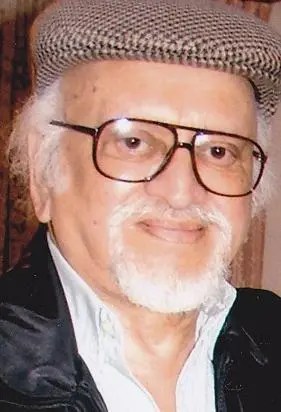
As I stepped into the house through the open front door, Mahindapala, stroking his white beard with one hand and opening the door wider with the other, looked at me with reddened, troubled eyes. “Thank you, Noel,” he said, ushering me inside.
His wife, looking at me—the family vet—said words that struck me: “The Angel of Death is coming.”
Words I never expected to hear. Words from ancient Scripture.
It was a spring evening in Melbourne. The lawn outside was neatly trimmed, the box shrubs along the fence cropped to waist height, and both sides of the front yard’s edges were lined with roses in bloom. I had parked my car behind theirs—a white sedan—and with my kit of syringes and medicines in hand, I gently knocked on the door.
I’m not sure why, but most Sinhalese families who moved from Sri Lanka planted rose bushes in their front yards and kept Alsatians in the backyard. Tamil households, on the other hand, would greet you at the door with brass mango leaves and a line of shoes. These practices were cultural markers carried across the seas.
Every visit to the Mahindapala triggered a Pavlovian response in me. If it was daytime, I would be fed. If it was in the evening, I would be offered a drink. Their hospitality was legendary. Mahindapala’s cooking was superb. The moment I pulled up and engaged the handbrake, my stomach would tighten with hunger or thirst. This was the kind of conditioned reflex Pavlov had once demonstrated with his bell and dogs.
The Mahindapala lived fifteen minutes from my clinic. They were an elderly couple, both originally from Sri Lanka—Mahindapala, a Sinhalese, and his wife, a Tamil. A love marriage.
When his wife called me “the Angel of Death,” the words hit me hard. Words feel more intense when you truly understand their meaning. Though I smiled and hid my feelings as I walked in, the phrase left a scar I carried for years.
As veterinarians, we perform euthanasia, often called “mercy killing”—when aged or suffering animals need to be released from incurable pain. We never make that decision alone; we explain the pros and cons, and the owners decide. For us, the animal’s suffering is the most important. Whether the owner is emotionally prepared—that is secondary.
Their cat, Bobby, a black-and-white tom, had been under my care for over ten years. He was about five or six when he was first brought in. I had been diagnosed with kidney disease years ago, and since then, he had survived on a special diet. But when he finally stopped eating, Mahindapala brought him in. Upon opening his mouth, I saw an ulcer at the back of his palate. It didn’t take me long to conclude: cancer. Oral cancer cannot be cured.
I first met Mahindapala not as a retired editor of the English-language Observer in Sri Lanka, but simply as Bobby’s devoted owner. I still remember the day: he walked into my clinic, carrying the cat like a child, asking me to clean its teeth. At the time, Tamil nationalists in Melbourne viewed him as a leading Sinhalese nationalist. Yet after that day, we became close friends. Although we often disagreed—he opposing Tamil militancy, I opposing LTTE terror—we respected each other. Privately, he was a warm, kind man.
By the time I met them, they were in their seventies, childless, with their lives centred around Bobby. Once, when Bobby went missing, we searched together until we found him at the RSPCA shelter. He hadn’t eaten there for two days. Cats often starve when displaced. It’s their instinct: in unfamiliar territory, with unknown predators, safety comes before food. Humans, too, find it hard to sleep in a new place on the first night. These evolutionary traits stay with us. But as soon as Poppy was home again and Mahindapala put food in front of him, he broke his fast.
When Poppy’s cancer was diagnosed, I decided not to pursue unnecessary treatments. Many Buddhists Sinhalese opposed euthanasia, citing religious beliefs against killing. Even medical families supported this view. A friend of my wife’s begged me to give repeated drips to extend her dying cat’s life. When she asked me to show her how to do it at home, I refused, saying my duty was to the animal, not sentiment. The cat eventually died at home, and they resented my decision. But the Mahindapala trusted me. Whether because she was a Catholic Tamil or because they both had faith in my judgment, they asked me to come to their home and perform the euthanasia.
While they spent Bobby’s last moments together in the bedroom, a visitor arrived—a man who looked like a Christian pastor. They spoke softly inside, while I sat alone in the hallway, and the words “Angel of Death” reverberated in my mind again.
The phrase has roots in many cultures. In Hinduism, Yama is the Lord of Death. In the Bible’s Book of Exodus, the Angel of Death brought the tenth plague upon Egypt: the death of every firstborn son, from Pharaoh’s palace to the slave’s hut, and even the firstborn of livestock. Only the Israelites, who smeared lamb’s blood on their doorposts, were spared. This event became the festival of Passover. That night, Jesus shared his Last Supper with his disciples before being betrayed and arrested. In Western culture, the “Angel of Death” has become a metaphor for serial killers, murderous doctors, and death itself.
When I finally stepped in, I softly stroked Bobby’s head before administering the sedative into his neck. Usually, when I touched him, he would arch and flick his tail. Today, he lay still. Only when the needle pricked did he lift his head faintly, but he lacked the strength to move. Tears streamed down the couple’s faces.
I signalled to Mahindapala, then injected the green solution into the vein of his foreleg. Within minutes, his breathing stopped. I checked with my stethoscope—his heart had ceased. Covering his body with a towel, I stepped out quietly.
In the back garden, a shallow grave was already dug. Bobby was lying in it. The pastor recited Scripture, and when the grave was filled, a red rosebush was planted on top.
As I said my goodbyes, I also felt the emptiness Bobby had left behind.
 Noelnadesan's Blog
பின்னூட்டமொன்றை இடுக