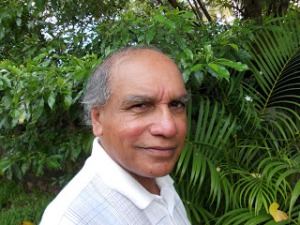
Dr. Noel Nadesan.
Education, as both a process and a lived experience, enables people to see the world clearly, seek truth, broaden their perspectives, and empower themselves. This is what we, as parents, hope to give our children. But what happens when a poor family loses its father—especially during war?
For such children, a gloomy world awaits them, through no fault of their own.
Sri Lankans have always shown deep empathy for those in distress. For more than 75 years, people across the country have raised funds and worked tirelessly to support those affected by hardship. We endured a brutal civil war for over 30 years, followed by natural disasters such as the tsunami and recurrent floods.
Natural disasters such as tsunamis and floods are beyond human control, and to some extent, their devastation is unavoidable. War, however, is different. War is the result of political failure. Politicians govern the country, impoverish it, and enrich themselves. Yet we, the Sri Lankan people, elect them repeatedly, often without hesitation.
Can we blame only the politicians?
It is like leaving one’s house unlocked and then blaming the burglar after a theft occurs.
This article tells the story of my friend, who pioneered a remarkable initiative—the Ceylon Student Education Fund—to support the education of war-affected children through Year 12.
In 1988, while I was studying at the University of New South Wales in Sydney, my friend L. Murugappoathy, together with a small group of like-minded individuals, established the Ceylon Student Education Fund. Its mission was simple yet profound: to educate children orphaned or displaced by war. I later became involved with the organisation, but there is no doubt that Mr Murugappoathy was its driving force.
At the time, he himself was a refugee in Australia, separated from his family in Sri Lanka. While many were consumed with anxiety about their loved ones, he chose to act. He helped establish an organisation that initially supported students in the North and East of Sri Lanka and later extended its reach to the Upcountry. The fund has operated continuously for 37 years.
Although Mr Murugappoathy is now incapacitated by illness, his legacy is extraordinary. Nearly 5,000 students received educational assistance through this program. Many went on to earn university degrees and now hold respected positions in Sri Lanka and abroad.
Sadly, the organisation will be wound up next year, after all remaining funds are fully disbursed. The amounts involved were significant—for example, at one point, over AUD 30,000 was spent on educational support alone. My friend was understandably disappointed by the closure, but I reminded him that our objective was to support war-affected children. The war ended 16 years ago, and it is now appropriate to conclude the program, just as disaster relief efforts end after floods subside.
I take pride in what this organisation has achieved. Unlike many short-term interventions, we helped students help themselves—by investing in their futures. At a time when some were collecting funds for arms, Mr Murugappoathy chose to collect funds for education.
This foresight was remarkable. His vision can be compared to Swami Vivekananda’s establishment of a school in Batticaloa—a belief that education is the most potent instrument of social transformation. Today, countless adults across Sri Lanka, working in every sphere of life, stand as living testimony to Mr Murugappoathy’s quiet but profound contribution.
Although the organisation is coming to an end, its success will endure through the lives it transformed and the example it set for future generations. It proves that a single individual, with clarity of purpose and thoughtful execution, can indeed bring about meaningful change in this world.
 Noelnadesan's Blog
பின்னூட்டமொன்றை இடுக