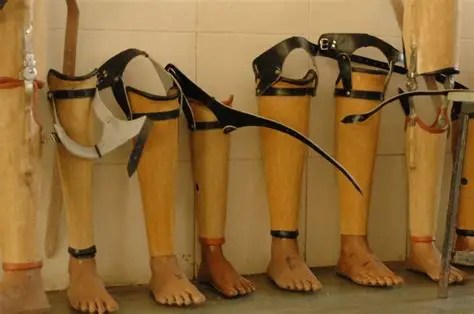
Our organisation, established to support both Sri Lankan Tamil refugees in India and the Tamil liberation movements, also aimed to help those who had lost limbs in the war. We coordinated with Dr P.K. Sethi, an orthopaedic surgeon, and master craftsman Ram Chandra Sharma, the creator of the Jaipur Foot, to train young men in Jaipur to manufacture artificial limbs.
We took many of them there. Yet despite often travelling to Jaipur with Dr Sivanathan during those days, I never saw any of the city’s landmarks. Looking back, it surprises me.
There were two reasons: first, our service work left us exhausted; second, our travel was funded with public money. Only years later, after I had moved to Australia, did I visit Jaipur twice as a tourist.
The train trip took two days, and we often stopped in New Delhi. I have some memories of those stopovers worth recording here.
Once, during the blazing Delhi summer, the heat roasted us like peanuts in hot sand. The places we stayed had no fans or air conditioning. You had to drink water constantly just to walk the streets. It was there that I learnt that water with a pinch of pepper cools the body.
The hot wind on my face brought to mind the tobacco kilns of the islet where I was born — except here, there was no tobacco, only sand. This was the edge of the Thar Desert. At night, it was too hot to sleep. Once, we poured water on the floor, laid a sheet of polythene over it, and lay on it to cool off.
For most of our time in Delhi, breakfast and dinner were just chapatti and dal — or bread. I was cautious about eating out. Having already fallen ill in Sri Lanka, I took care not to risk typhoid or hepatitis in India. Sometimes I simply went hungry.
One day, a friend took me to Andhra Bhavan for lunch. The food was tasty, but I cried while eating — from the chilli, but previously, during my time in India, my mum had passed away in Sri Lanka, and I hadn’t been able to see her body. I often soaked my pillow with tears at night in Chennai, but this was the only time I cried in broad daylight.
Another morning, after dreaming of Indian Barramundi fish, I set off in search of fish in Delhi, still wearing my sarong. Finally, we found a small market, not for sea fish but for pond fish. Usually, I wouldn’t have gone near them, but I was imagining the fish curries of Jaffna and the coconut-milk stews of the islands.
As I approached a woman selling fish, she suddenly grabbed my sarong and said something I caught only as “Calcutta.” I clutched my sarong with both hands — I was wearing nothing underneath. I had jumped out of bed and gone straight out.
My Indian mate chuckled and said, “She was asking when you came from Calcutta and what news you brought.”
“She could have asked without pulling my sarong!” I said.
Only Bengalis here wear sarongs like yours — but they wear them over half trousers. She assumed you were Bengali. In Delhi, it’s the Bengalis who eat and sell fish,” he said.
I had similar experiences in Chennai. At first, fish sellers would ask if I was Malayali. Later, as more Sri Lankans came to Tamil Nadu, they began calling us Ceylonese. I even overheard locals blaming “the Ceylon people” for driving up the price of fish.
One day in Delhi, while we were staying at a modest place, a message arrived from EPRLF leader Padmanaba:
“Come to the Asoka Hotel. There’s plenty of beer here.”
We knew that five leaders of Tamil movements were in Delhi at that time. It was around the period just before the India–Sri Lanka Accord, after the Tigers had destroyed TELO.
An officer from India’s RAW intelligence service arrived in a black car to take us there. At the hotel, Padmanaba, Shantan, and Yogasangari met us. I was then introduced to EROS Balakumaran and TELO Selvam. Later, in an alcohol haze, the EROS founder, Ratnasabapathy, arrived — already well-acquainted with Sivanathan, but someone I kept a cautious distance from.
The only leaders we didn’t see were Prabhakaran and Uma Maheswaran, even though their rooms were next to each other.
In my mind, I thought: they must be counting the hours until they can get away from here. Under Indian intelligence surveillance in a hotel room, yet refusing to be together for the sake of their people!
Then the thought faded, replaced by more conflicting ones.
Ratnasabapathy suddenly said, “Come, I’ll take you to see my younger brother and Uma.” He tried to pull us by the hand. Even though I had met Uma before, I refused. Dr Sivanathan, seeing my reaction, also stayed put.
Later, my old schoolmate Yogasangari invited me into his room. We had a friendly chat, and I left with a few bottles of beer.
Even today, I feel a quiet pride in refusing to visit Uma and Prabhakaran’s rooms that night. Other leaders might also have ordered killings, but in my mind — even in the 1980s — these two had been drenched in blood.
Years later, when the Tigers killed Yogasangari, I remembered our chat in his hotel room that night, and the memory deepened my grief.
In my final days in Chennai, the EPRLF split. From their Chennai office, my friends Mithran and Maheswararaja went with Douglas Devananda. Not long after, I heard about the incident at Choolaimedu: Douglas had been there, and there’d been an argument.
At the time, their split saddened me — yet I was glad they managed to part ways without violence. That in itself was a sign of culture. Other Tamil movements and even political parties had only ever branded those who left as “traitors.”
It was becoming clear to me — even without much political sophistication — that not only the armed struggle in Eelam but also the Indian back-end and the Tamil movements in exile were heading towards an end. Until then, I had held off accepting migration offers to Australia and America. But my wife’s parents accused me of abusing their daughter and children, then moved to Australia, continuing to pressure my wife from there.
By mid-1987, I had decided to travel to Australia. Around that time, my old schoolmate Krupakaran — who would later serve as Finance Minister in the merged North-Eastern Provincial Council — told me that Indian troops had landed on the coast of Ramanathapuram, South India
As I was heading to the airport, my mate Gunchi, a short, wiry bloke, said: “Macha, I can’t come to see you off. The Indians have called us.” I left him the key to my house and went to the airport.
At the Tamil Medical Centre, Dr Thanikasalam continued his medical work. Leadership was provided by Dr Shanti Rajasingham, with Dr Sivanathan managing the finances. There was less than a lakh rupee left in the account. I handed over my role as secretary to my childhood friend, Dr Pon. Ragupathy (who later became a professor).
The three years and two months I spent in India taught me new lessons, just as my four years at Peradeniya had taught me veterinary medicine. Because I kept an open mind, the places I visited and the people I met became my teachers.
When I boarded the ship in Talaimannar years ago, my heart was heavy. The same was true when I got on the plane in Chennai — but now my wife and children were with me, their minds full of bright dreams of Australia. Alongside my hopes for the future, I carried the knowledge and experiences India had given me.
The end.
 Noelnadesan's Blog
பின்னூட்டமொன்றை இடுக