As the Tamil Medical Fund expanded, we gradually increased our activities. At that time, only my wife, Shiamala, was managing the medical work. The main recipients of our services were local residents, especially members of the Eelam People’s Revolutionary Liberation Front (EPRLF). Additionally, many Sri Lankan Tamils displaced by the war and living nearby also sought treatment. Even local Tamils from Chennai started visiting, which raised our workload.
We devised a plan to teach basic health knowledge and first aid to educated young women from the refugee camps. We took them to Chennai for week-long training sessions. Some individuals who showed interest and initiative in health matters within the camps were selected for a more intensive two-week training program at a non-government organisation in Tirupur.
We also contacted several medical experts in Chennai, many of whom kindly offered their services either for a small fee or free of charge. At that time, the word “Eelam” held a special significance in Tamil Nadu. I was also aware of a few individuals who exploited this sentiment, claiming to be refugees to travel for free across the state and visit temples without paying.
When Shyamala conducted medical training in the camps, it became my responsibility to visit the camps and bring the trainees. Except for the districts of Kanyakumari and Thoothukudi, I travelled to nearly every other district. Refugees from Sri Lanka were sheltered in cyclone camps along the coast, from Chennai to Mandapam. I still fondly remember those days—walking with bundles on our shoulders, our feet sinking into the sand, driven by the belief that we had come to India to serve a meaningful cause.
During one trip, I had to visit a refugee camp near Nagapattinam. After getting off the bus, we had to walk several kilometres. Our assistant, Karunanidhi, accompanied me that day. A friend from the EROS movement (I often forgot names and referred to members of EROS and EPRLF as comrades) gave us a lift on his motorcycle. All three of us squeezed onto the same bike.
To avoid police attention, we took the village side roads under the blazing midday sun. I sat in the middle, with Karunanidhi at the back. The old motorcycle rattled loudly as we rode through sandy groves of coconut and palm trees.
It was groundnut harvest time—crops sown during the monsoon. I could taste the salt in the breeze, a reminder that the sea was nearby.
As we drove through an area lined by palm trees standing like silent sentinels, more than ten men suddenly appeared from behind the trees and encircled our bike. They shouted at us to turn back and began striking us. The blows weren’t brutal or intended to cause serious harm. Since I was in the middle, Karunanidhi and the EROS comrade took the worst of it. Karunanidhi protected his head with his arms, so the hits landed on his shoulders. I, having never faced such violence before, was frozen. Luckily, the EROS comrade wore a helmet, which kept him from serious injury, although he was struck on his chest and shoulders.
Suddenly, the EROS comrade yelled, “We are Eelam Tamils!”—and as if by magic, the attacks stopped straight away.
Those who had assaulted us started apologising profusely. Their leader, dressed in a white dhoti, explained the situation. Local labourers had demanded high wages to harvest the groundnuts. When the landowner refused, he brought in outside labourers. Expecting this, the locals had hidden in the palm groves to chase away outsiders — and we had simply arrived at the wrong place at the wrong time.
After their apologies, they took us home, showed us kindness, and then we headed to the refugee camp at the cyclone shelter.
A clear pattern from my time in Tamil Nadu was how easily people could be swept up by mob mentality. It took very little to ignite collective anger. However, when spoken to individually, they were much more rational and fairer.
Since my wife managed the clinic during the day, we decided to appoint someone for night duty. We consulted Karunanidhi, who had been introduced to us by Padmanabha. He recommended a man displaced by the hill-country violence, whose brother was either a member or supporter of the EPRLF. He was known as Dr. Boss, a former plantation medical officer. A family man with two children, he had been affected by the 1983 riots.
We offered him the night shift while Shiamala continued her day duties.
“We can only afford to pay 500 rupees,” I told him. “Please don’t think of it as a salary—we’re not in a position to offer wages. But we hope it helps.”
Dr. Boss accepted. He always wore full-sleeve shirts and never rolled them up—perhaps a habit from his years in the cooler climate of the hill country, which he kept even in Chennai’s heat.
Around this period, we started meeting amputees, mainly from militant groups. This was our first exposure to the Jaipur Foot.
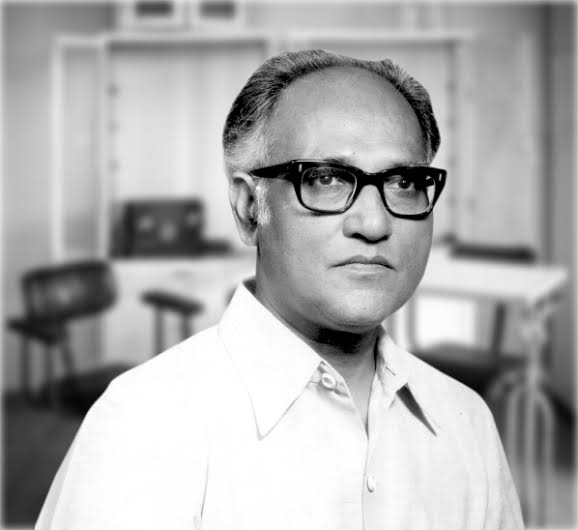
In 1986, as Secretary of the Medical Unit for Tamils, I travelled with my friend, Dr. Sivanathan, to Jaipur after hearing about this prosthetic breakthrough. The Jaipur Foot had gained national attention after Bharatanatyam dancer Sudha Chandran lost her leg in an accident near Tiruchi. After receiving a Jaipur Foot, she returned to dancing and later became a well-known film actress, starring in the movie Mayuri. Her story was widely covered in the media.
Ram Chandra developed the Jaipur Foot, which was later enhanced by orthopaedic surgeon Dr. Pramod Karan Sethi. Dr. Sethi designed a lighter version using aluminium, making it suitable for barefoot users. Its affordability and capacity to support squatting and farming activities made it vital in developing countries and conflict zones like Afghanistan and Mozambique.
Our first train trip from Delhi to Jaipur was unforgettable—the pink-washed buildings, vibrant signboards, colourfully dressed locals, and camels on the roads filled us with awe.
We arrived in Jaipur at night and checked into a hotel. The next morning, we went to Sawai Man Singh Hospital. When the staff rang Dr. Sethi’s residence, they said, “Two Sri Lankan Tamils are here looking for you.”
“Send them in straight away,” came the reply.
We were kindly welcomed to his home that morning. Although he was officially retired, Dr. Sethi still played an active role in the Jaipur Foot project. He told us about his recent trip to Afghanistan, where, at the request of the International Red Cross, he had trained others in making prosthetic limbs.
When we explained the war situation in Sri Lanka and our goal to train locals in this work, he offered full support.
After breakfast at his home, we set off. In those few hours, I was truly moved by his humility, humanitarian outlook, and strong dedication to service. Despite being a globally acclaimed orthopaedic surgeon, he spoke, like any regular man, never using medical jargon or seeking the limelight.
When I asked him, “Are you the one who invented the Jaipur Foot?”, he modestly replied, “The credit goes to Ram Chandra.”
Born in Kashi (Varanasi) and trained in orthopaedics in Edinburgh, Dr. Sethi collaborated with Ram Chandra—who initially made the foot using wood and rubber—to develop a lighter, more adaptable version.
We visited Jaipur three times and trained 18 Sri Lankan Tamils successfully. Many more were later trained through government-sponsored programs.
Dr. Pramod Karan Sethi, who served as both a professor and a surgeon, was honoured with the Padma Shri by the Indian government and the Ramon Magsaysay Award by the Philippines for his significant contributions.
He passed away on 6 January 2008, aged 80—a man who belonged not only to India but to the world.
 Noelnadesan's Blog
பின்னூட்டமொன்றை இடுக