I have returned to Sri Lanka to celebrate 50 years since my time at Peradeniya University.
Over the years, I have travelled to many places in Sri Lanka for various reasons: reconciliation efforts during the mid-war in 2009, refugee issues, rebuilding homes and hospitals, and attending literary conferences. But this was the first time I travelled back solely to celebrate.
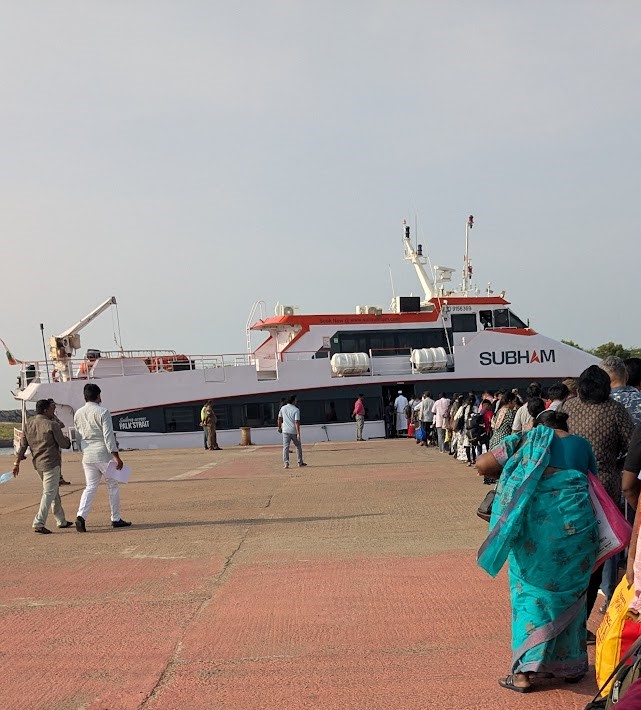
My wife, Shiamala, and I travelled from Nagapattinam, the south coast of Tamil Nadu, to Kankesanthurai (KKS) in Northern Sri Lanka by ferry, which now runs regularly. Instead of flying directly to Colombo from New Delhi, I flew to Madurai and then drove for several hours to the east coast, to Nagapattinam. This port, once a bustling hub during the Chola era, when kings and their navy set sail to Sri Lanka and Southeast Asia, has now lost its former glory, reduced to a quiet fishing town.
The ferry journey across the Palk Strait took about four hours and was quite comfortable. Customs checks, however, were more rigorous than at an airport, especially on the Indian side. Officers were alert, fearing the possibility of Kashmiri militants attempting to slip into Sri Lanka. This was not just paranoia—Tamil news outlets had reported similar concerns.
Many Indian tourists were on board, along with Jaffna business people who were once again buying saris in bulk from Tamil Nadu to sell in Jaffna for a small profit. This traditional trade had vanished during the Thirty Years’ War but seems to be slowly returning.
At KKS, Sri Lankan customs were more relaxed for me, perhaps because I was travelling with an Australian passport and holding dual citizenship. The officer was courteous, but that courtesy was not extended to all. Many passengers and traders got into long arguments about whether their merchandise from India should be taxed.
We hired an auto-rickshaw to reach my home in Kokuvil. An elderly Malayali man, a retired gentleman carrying only a single handbag, joined us. He was headed to Anuradhapura for a three-day holiday. I was impressed by his simplicity and willingness to travel alone. We dropped him at the Jaffna bus stand.
Jaffna was sizzling, not ideal for walking and getting things done. I visited the bank, where a young female teller served me with a smile. After withdrawing some Sri Lankan rupees, I went to the fish market and was pleasantly surprised to find a bluefin tuna, rare in Jaffna’s shallow seawater and reasonably priced. I also bought some fresh vegetables. Meanwhile, Shiamala visited the Nallur Temple.
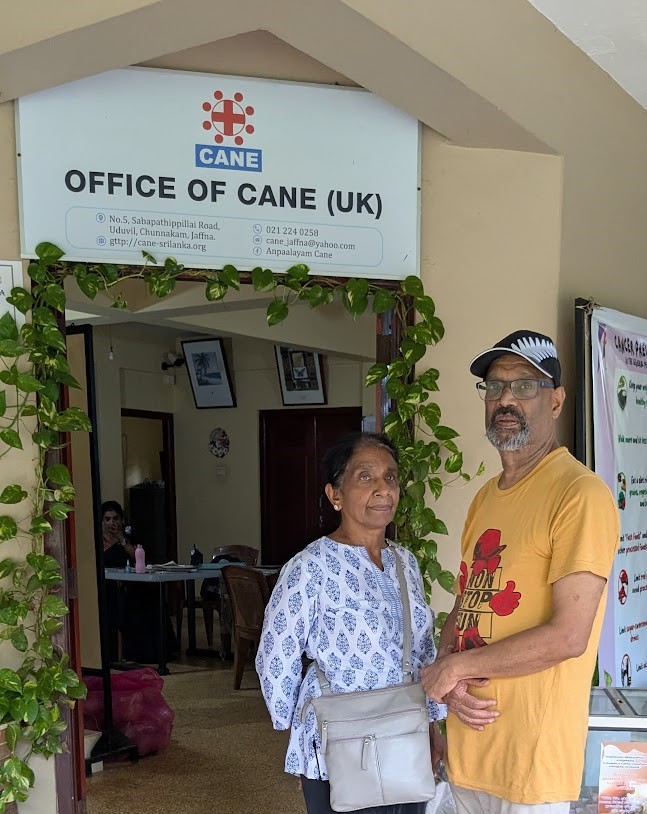
The next day, Shiamala was interviewed on Dan Tamil TV on cancer as a doctor, survivor, and also visited the CANE Cancer Palliative Centre in Chunnakam. That afternoon, we visited a friend who was recovering from chikungunya, a mosquito-borne disease we were also scared of. While we were there, a sudden, heavy rainstorm hit. Later, we were saddened to learn that a 15-year-old boy had been struck and killed by lightning while working in his garden. It was a brief downpour, but it took a young life. We were deeply moved.
The following morning, we left Jaffna for Kilinochchi, where Shiamala attended a cancer awareness meeting organised by the Rotary Club. That night, we continued to Anuradhapura. The meeting in Kilinochchi was attended by 14 people, three of whom had family members battling cancer, including some young children. It was a sobering reminder of how widespread cancer has become in Sri Lanka.
Anuradhapura
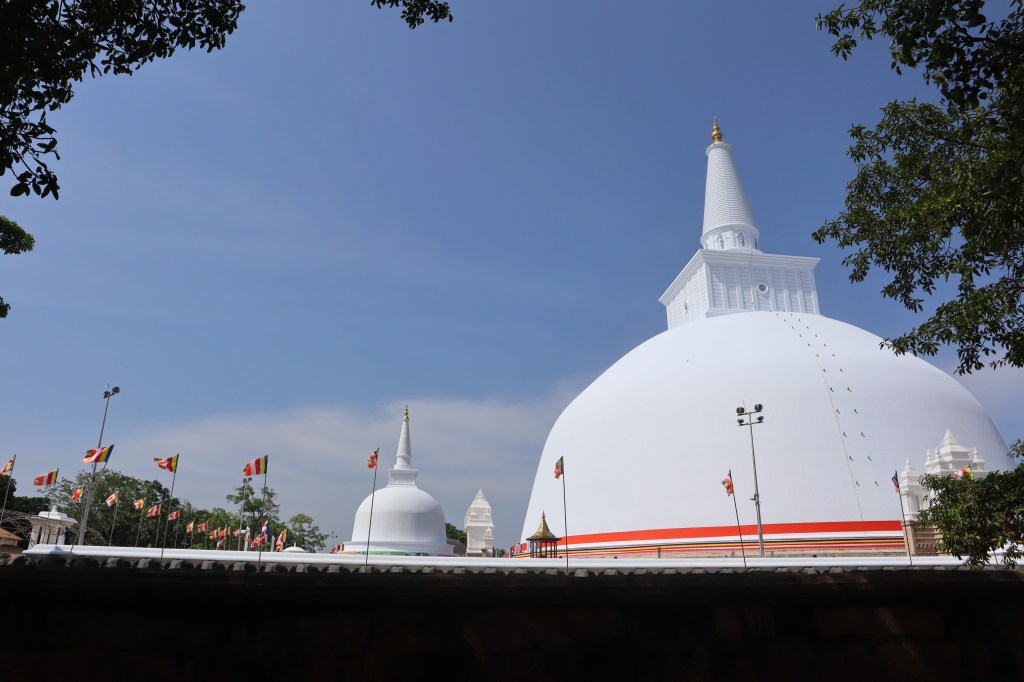
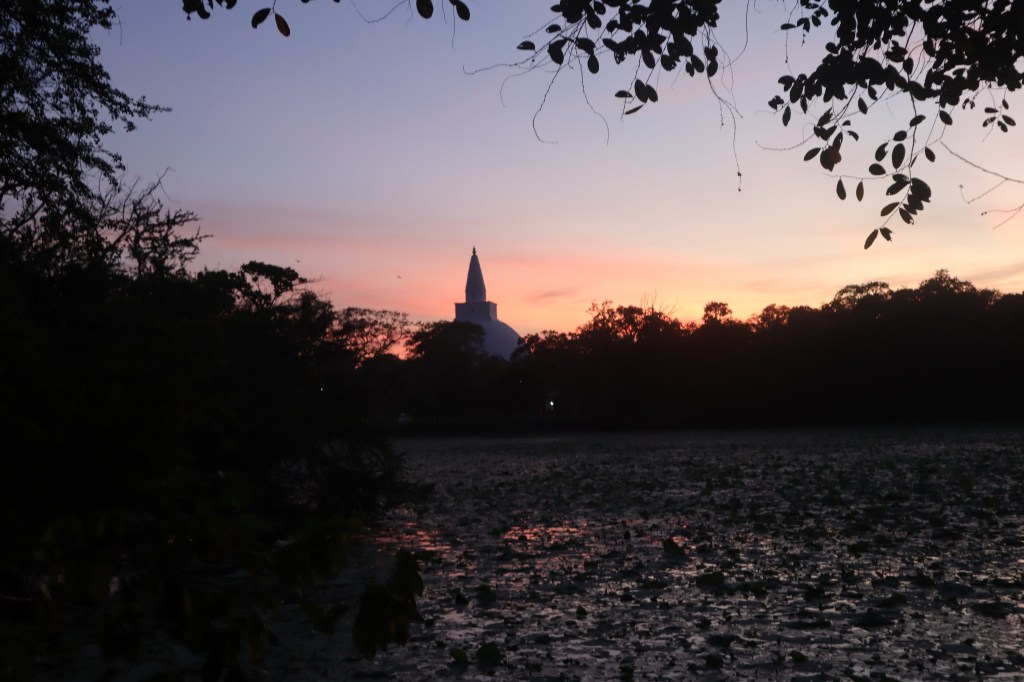
Though I worked as a young veterinarian in the 1980s and spent over three years in Medawachchiya—just fifteen miles away—I had never taken the time to visit the ancient city of Anuradhapura, despite travelling through it many times. This time, we stayed two nights in the old town and visited many of its famed Buddhist stupas. I was glad to see that many of them are being renovated and that devotees continue to pray at these sacred sites. The Ruwanweliseya Stupa was especially magnificent, standing tall and proud. Built in the 2nd century BC by King Dutugemunu, it remains a testament to the architectural and spiritual achievements of that era.
We also visited the Sri Maha Bodhiya—the world’s oldest tree with a documented history. It was planted in the Mahamevna Park by King Devanampiyatissa in the 3rd century BC and is revered by Buddhists to this day.
As someone who is not particularly religious, I found myself deeply impressed by the ancient irrigation tanks in and around Anuradhapura—namely, Nuwara Wewa, Abaya Wewa, and Tissa Wewa. Standing on their bunds, looking out over the vast quantities of water used for rice cultivation, I felt as though I was time-travelling, comparing the visionary engineering of ancient kings with the often short-sighted policies of modern Sri Lankan leaders.
We also visited the Anuradhapura Museums, which house archaeological artefacts that reveal more than a thousand years of urban sophistication and agricultural civilisation—a civilisation that sadly collapsed due to the Chola invasion.
Polonnaruwa
Polonnaruwa was the second capital of ancient Sri Lanka, established after the Chola destruction of Anuradhapura. Initially a military post, the Cholas later developed the city and constructed Hindu temples. However, after 1070 CE, the Sinhalese King Vijayabahu reclaimed the city.


While many Buddhist stupas and monasteries remain, I also observed Saiva temples, reflecting the coexistence of both religious traditions. I witnessed an extraordinary scene where a Hindu family was lighting oil lamps at a lingam in a dilapidated Shiva temple. It was a powerful indication that Buddhism and Hinduism not only coexisted but also complemented each other.
Buddhism, being a philosophy, doesn’t offer direct means for individuals to seek redemption for their sins, whereas Hinduism provides a more theistic framework with answers for many existential questions.
The great lake that forms the backbone of the region’s irrigation system was built by King Parakramabahu. His reign is considered one of the most celebrated in Sri Lankan history. The Lankathilaka Image House, constructed during his time, still showcases the architectural brilliance and artistic skill of the period.
I also visited the remnants of the Nissanka Latha Mandapaya near the great Parakrama Samudra (“Ocean of Parakrama”). Sadly, it was the Kalinga invasion from India that led to the eventual decline and destruction of Polonnaruwa.
Today, Polonnaruwa is a better-preserved ancient city compared to Anuradhapura. We stayed at a hotel on the edge of the vast Giritale Tank, enjoying the serene beauty of the historic landscape.
The journey from Polonnaruwa to Batticaloa was smooth. While many Tamils blame former President Mahinda Rajapaksa for the deaths of Tamils during the defeat of the Liberation Tigers of Tamil Eelam (LTTE)—one of the most ruthless terrorist groups of our time—many Sinhalese criticise both Mahinda and his brother, Gotabaya Rajapaksa, for widespread corruption and nepotism.
I understand those criticisms, but I also see the other side—what every Sri Lankan continues to benefit from today: infrastructure. Sri Lanka now boasts world-class roads, bridges, and ports. Having travelled to many countries, I can confidently say that Sri Lankan roads are among the best.
I spent three nights at Rivera Resort, near the scenic Kallady Bridge—a truly beautiful location that also offers authentic eastern Sri Lankan cuisine. The surrounding trees and water offer a refreshing break from the summer heat.
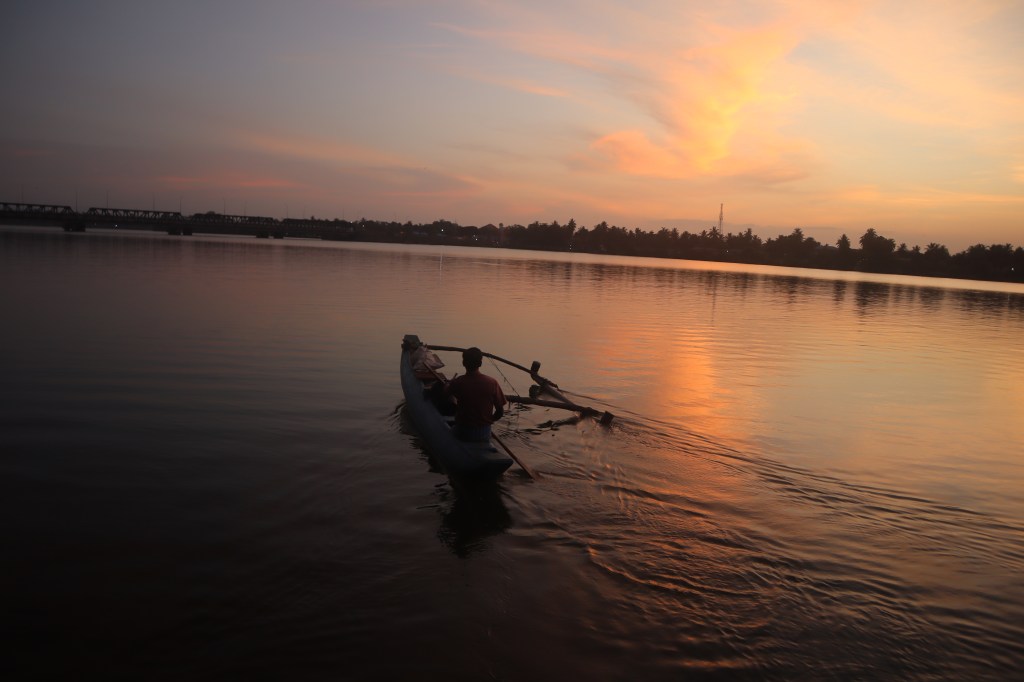
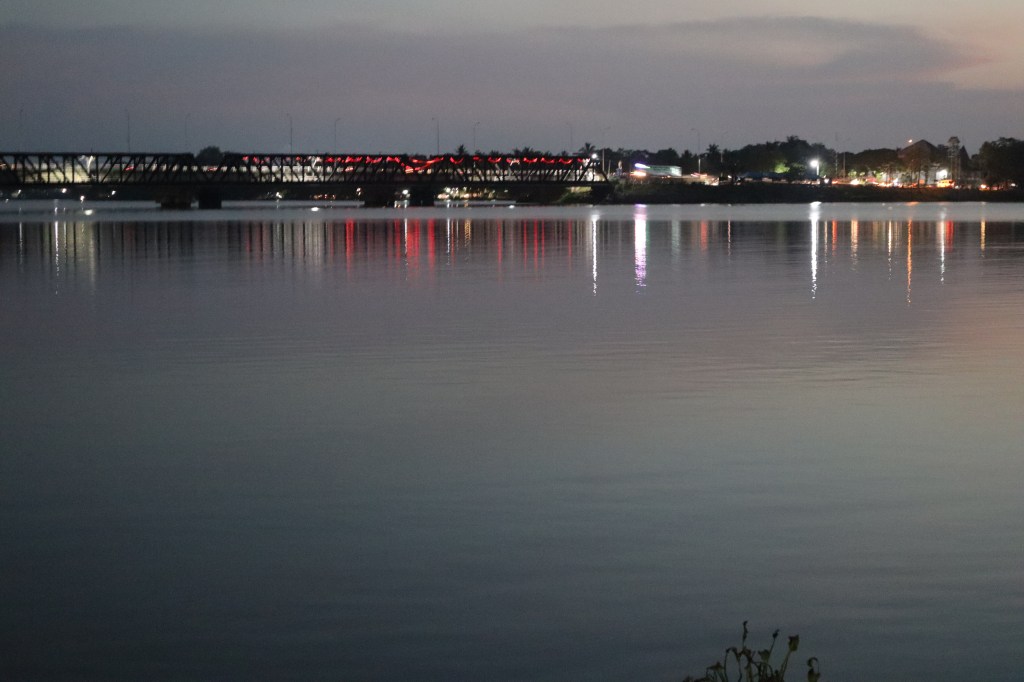
In Kalmunai, I met a few Tamil literary friends and was impressed by the progress made in the Eastern Province since the end of the war. Development there appears to outpace that of the Northern Province. I hope the Eastern Province can chart its political path, decoupling from the Northern Province while embracing the shared language and cultural ties.
Continues :-

 Noelnadesan's Blog
பின்னூட்டமொன்றை இடுக